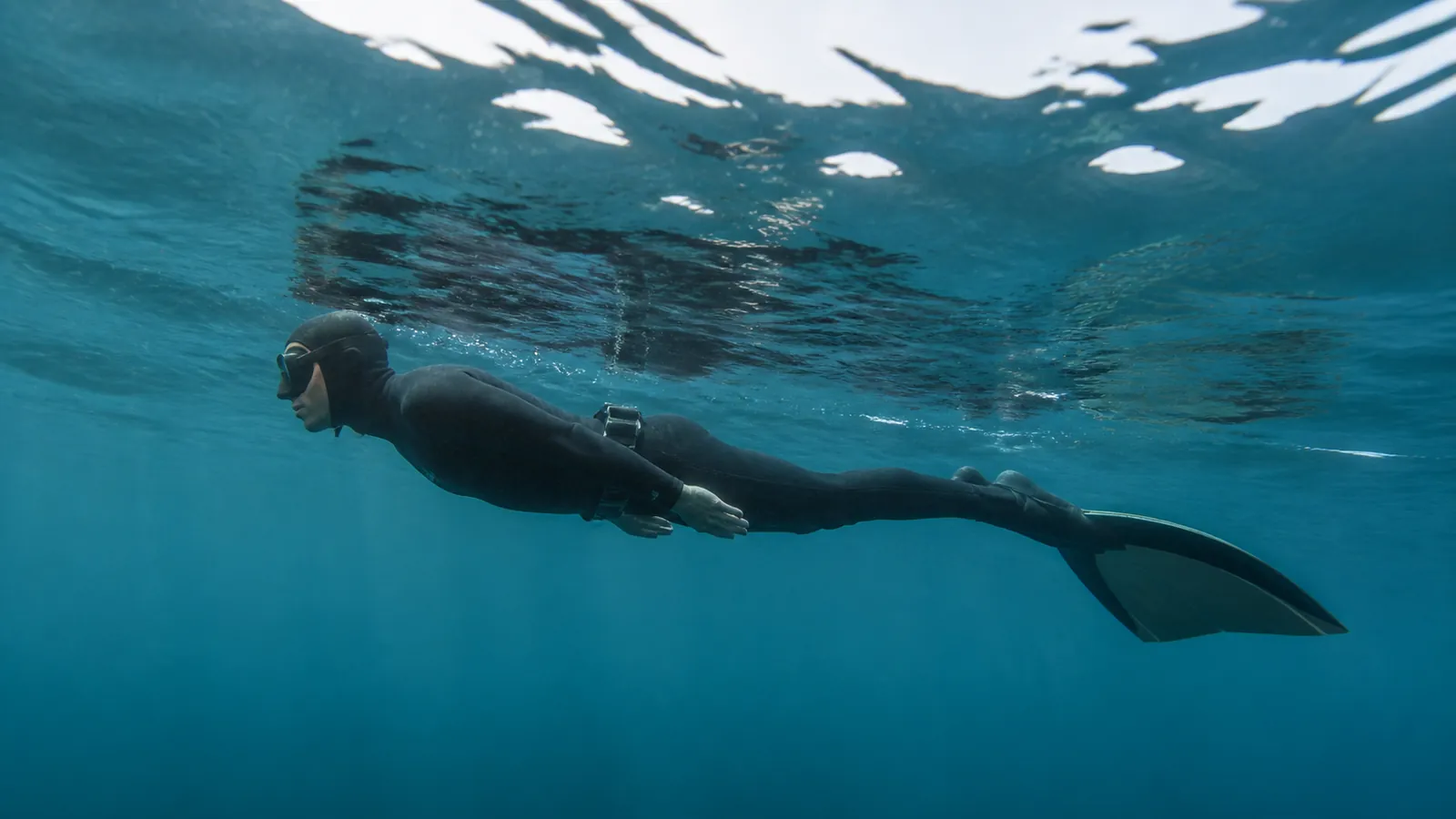
Freediving Breath-Hold Training: Safe Introduction and Progression Principles
Many people first hear about freediving because of the question "How long can a person hold their breath?" Two minutes, four minutes, or even longer—these numbers sound like a kind of talent, but what truly determines breath-hold ability is never "forcing it," but a method that can be trained safely and that the body gradually adapts to. This article is not about "breaking records." It explains how breath-holding happens and how to help the body use oxygen more efficiently within a professional framework.
The Nature of Breath-Holding: Not "Forcing It," but "Saving Oxygen"
Freediving performance depends more on how the body treats that one breath than on simply comparing lung capacity. Individual lung volume, training adaptation, and physical condition vary widely. Deliberately chasing a specific time number can easily lead you away from the path of safety.
The Body's Main Oxygen Consumers Are the Brain and Muscles
At rest, the brain consumes a significant proportion of the body's oxygen. When you are tense, muscle tension increases and heart rate rises, which further increases oxygen consumption. "Saving oxygen" means letting the body enter a low-metabolism, low-tension state—relaxation, not forcing yourself to endure.
What Breath-Hold Training Trains
The core of training is not to extend breath-holding indefinitely, but to improve the body's tolerance to carbon dioxide, lower resting oxygen consumption, and learn to use relaxation to delay the "urge to breathe." Some of these abilities can be improved through progressive training under the guidance of a professional, but results vary from person to person, and individual differences must be fully respected.
Safety Information: Please Read These Points Before Training
Breath-hold training is not a "breath-holding contest." It is a practice that requires taking your body's signals seriously. Before you start, please confirm the following:
- Health screening: If you have any health concerns related to the cardiovascular, respiratory, ear, nose, and throat, or nervous systems, consult a doctor first and begin training only after assessment by a professional instructor.
- Practice only when you are in good physical condition and fully awake: If you feel dizzy, chest tightness, nausea, visual abnormalities, or any discomfort, stop immediately and return to normal breathing; do not continue training that day.
- Never practice alone, whether in water or while driving: Even in the shallow end of a pool, a buddy trained in freediving rescue must directly supervise you at all times throughout, and hand signals, rescue roles, and recovery intervals must be agreed on in advance.
- Never hyperventilate: Hyperventilating before a descent or breath-hold, or deliberately prolonging exhalation, lowers blood carbon dioxide levels and delays the urge to breathe. It is one of the important and preventable risk factors for shallow-water blackout/fainting (shallow-water blackout, BO).
- For dry static apnea on land, you can use MyWowTrips' land breath-hold trainer to help with timing, but it is only a timing tool. It is not medical advice, cannot replace the guidance of a professional instructor, and cannot make the training itself safe.
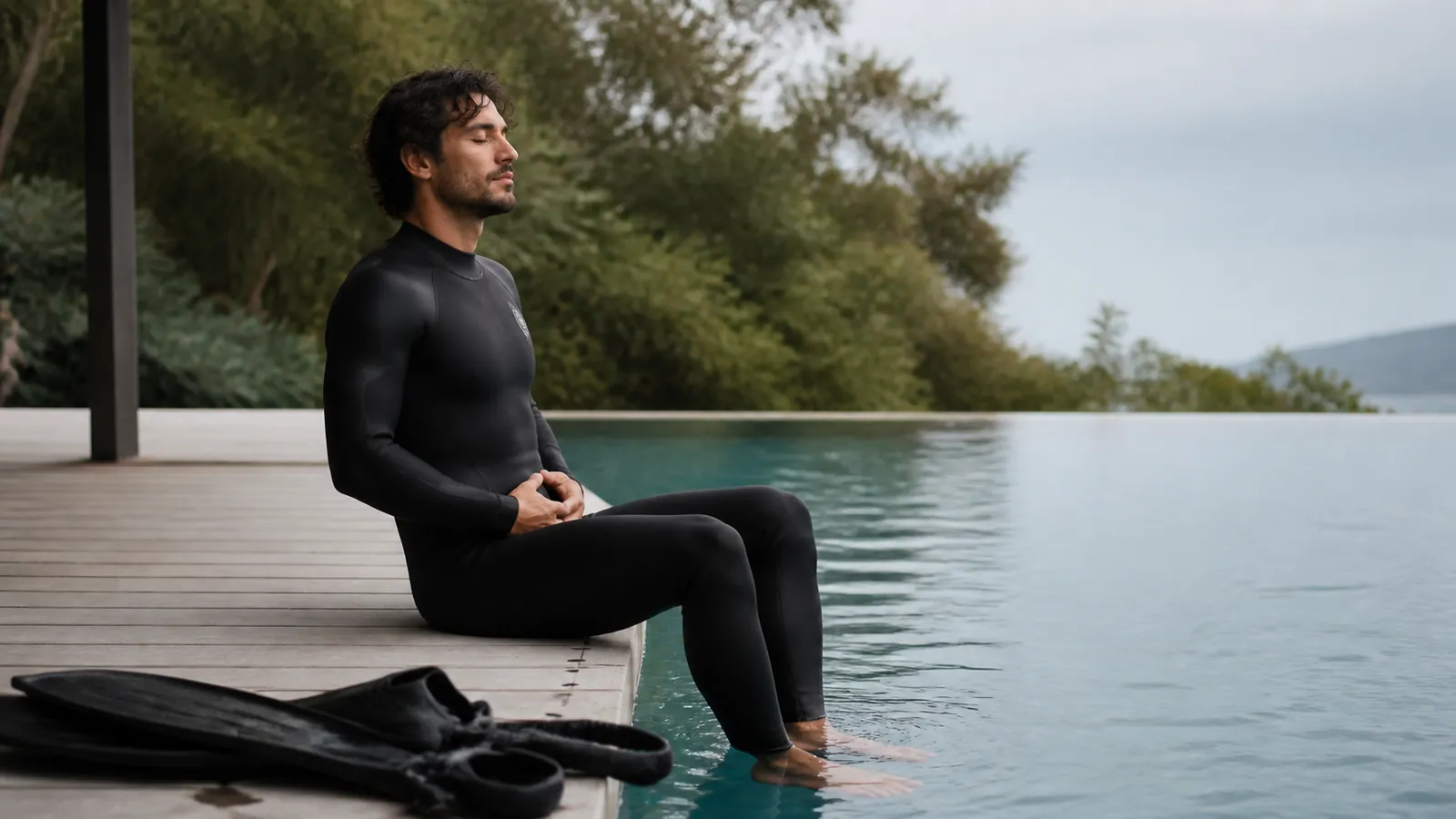 Freediver relaxing and breathing at the surface to prepare for training
Training Framework: Relaxation as the Foundation, Safety as the Boundary
There is no fixed prescription for breath-hold training that suits everyone. The following framework is only a reference for an introduction. Specific intensity, duration, and progression should be individualized by a certified instructor based on your health status, skill level, and recovery state. At all times, do only non-maximal, non-sprint training.
Step 1: Surface Breathing and Relaxation
Set aside quiet time each day for natural, relaxed tidal-volume breathing: keep a normal breathing rhythm, and do not deliberately breathe deeply, breathe rapidly, or prolong exhalation. The goal is to observe your degree of relaxation and changes in heart rate after breathing, not to "fill up" more. If you practice with the trainer, focus on relaxation itself rather than staring at a stopwatch and chasing duration.
Step 2: Static Apnea (STA) Basics
In a safe on-land environment and with a qualified buddy supervising, you can start with comfortable, short static apnea. Each time, do it in a state of complete relaxation rather than pushing to a sprint, and record how you feel instead of merely pursuing a longer time. Leave specific durations and progression pacing to your instructor to plan according to your situation.
Step 3: Dynamic and CO₂ Tolerance (Only Under Instructor Supervision)
Once the basics are stable, under an instructor's design and supervision, you can add dynamic practice with fins and carbon dioxide tolerance practice. This type of training is higher intensity. It must be done on land, without maximal effort, and without hyperventilation, with a professional overseeing it, to avoid mistaking "tolerating the urge to breathe" for "being safe."
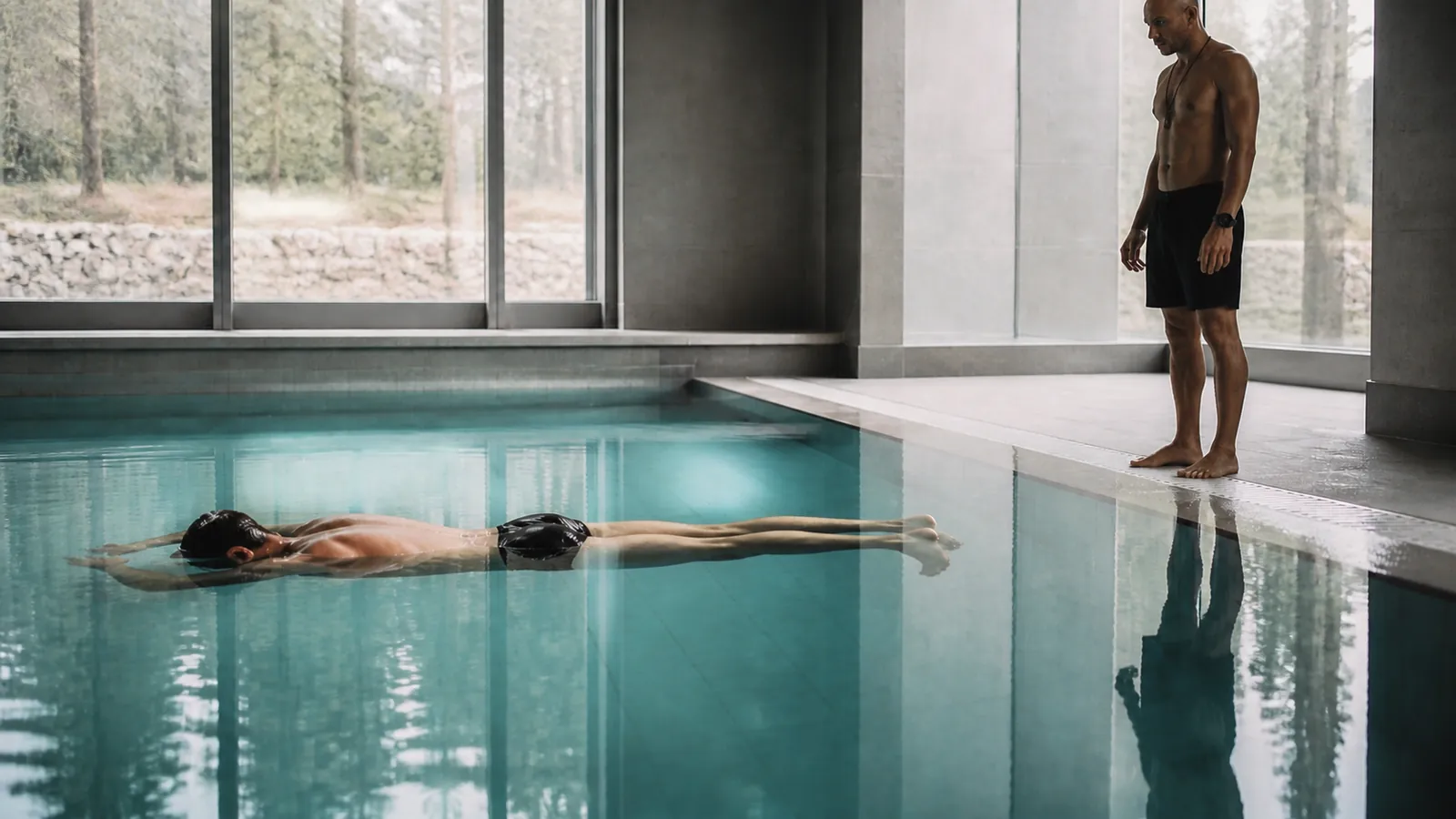 Static apnea practice under buddy supervision
Safety Bottom Line: These Things Must Never Be Skipped, Not Even Once
All the benefits of breath-hold training are built on safety protocols. The following points are the bottom line, not suggestions:
- A qualified buddy must directly supervise throughout: The buddy must be trained in freediving rescue, directly observe throughout, not be distracted by looking after others, and agree in advance on signals, rescue roles, and recovery intervals.
- Hyperventilation is strictly prohibited: Do not deliberately breathe deeply, breathe rapidly, or prolong exhalation; maintain natural breathing before a breath-hold.
- Stop if you are not in good condition: If you have a cold, are fatigued, have emotional fluctuations, or are sleep-deprived, you should pause training. Physical condition is the first gate of safety.
- Progress gradually; do not chase records: Intensity, duration, and depth must all be increased step by step. Resist the urge to "do just a little more than last time."
- Incident response plan: If BO, loss of motor control (LMC), water inhalation, or suspected drowning occurs, stop training for the day immediately, follow trained first-aid procedures, and seek medical evaluation—even if the person appears to have recovered, a medical check is recommended, and they should stay out of the water and rest.
Common Misconceptions
| Misconception | Reality |
|---|---|
| "The longer you hold your breath, the better you are" | Relaxation and safety are far more important than duration. Chasing duration often triggers BO. |
| "Taking a few big breaths before entering the water will make you feel more confident" | Hyperventilation or deliberately prolonging exhalation are exactly high-risk factors for BO. |
| "You don't need a buddy in the shallow end of a pool" | BO can happen without warning. Shallow water also requires a qualified buddy to directly supervise. |
| "I feel good today, so I can push for one more breakthrough" | Feeling good does not equal being safe. Gradual progression is the long-term approach. |
A Beginner's Pace to Start Today
Here is a conservative direction for beginners: first do surface relaxation breathing, then perform short static apnea in a safe on-land environment with buddy supervision; consider dynamic work and progression only after an instructor's assessment. The goal at the introductory stage is not to challenge a certain time number, but to let the body remember what a "relaxed breath-hold" feels like. Each day, you can use MyWowTrips' land breath-hold trainer for recording and rhythm assistance, but please focus your attention on relaxation rather than staring anxiously at the stopwatch.
Freediving breath-hold training is essentially a dialogue with your own body: exchange enough patience for lower oxygen consumption, and follow proper protocols so that each training session ends safely. Starting today, make "saving oxygen" rather than "forcing a breath-hold" your goal, and under professional guidance and within safety boundaries, gradually get to know your own breathing.
Disclaimer: This article is for knowledge sharing only. It does not constitute medical advice and cannot replace the guidance of a professional instructor. Freediving is a high-risk sport. All training should be conducted only when you are in good physical condition, with a qualified buddy supervising, and under professional guidance. If you feel unwell, stop training immediately and consult a doctor or professional instructor.