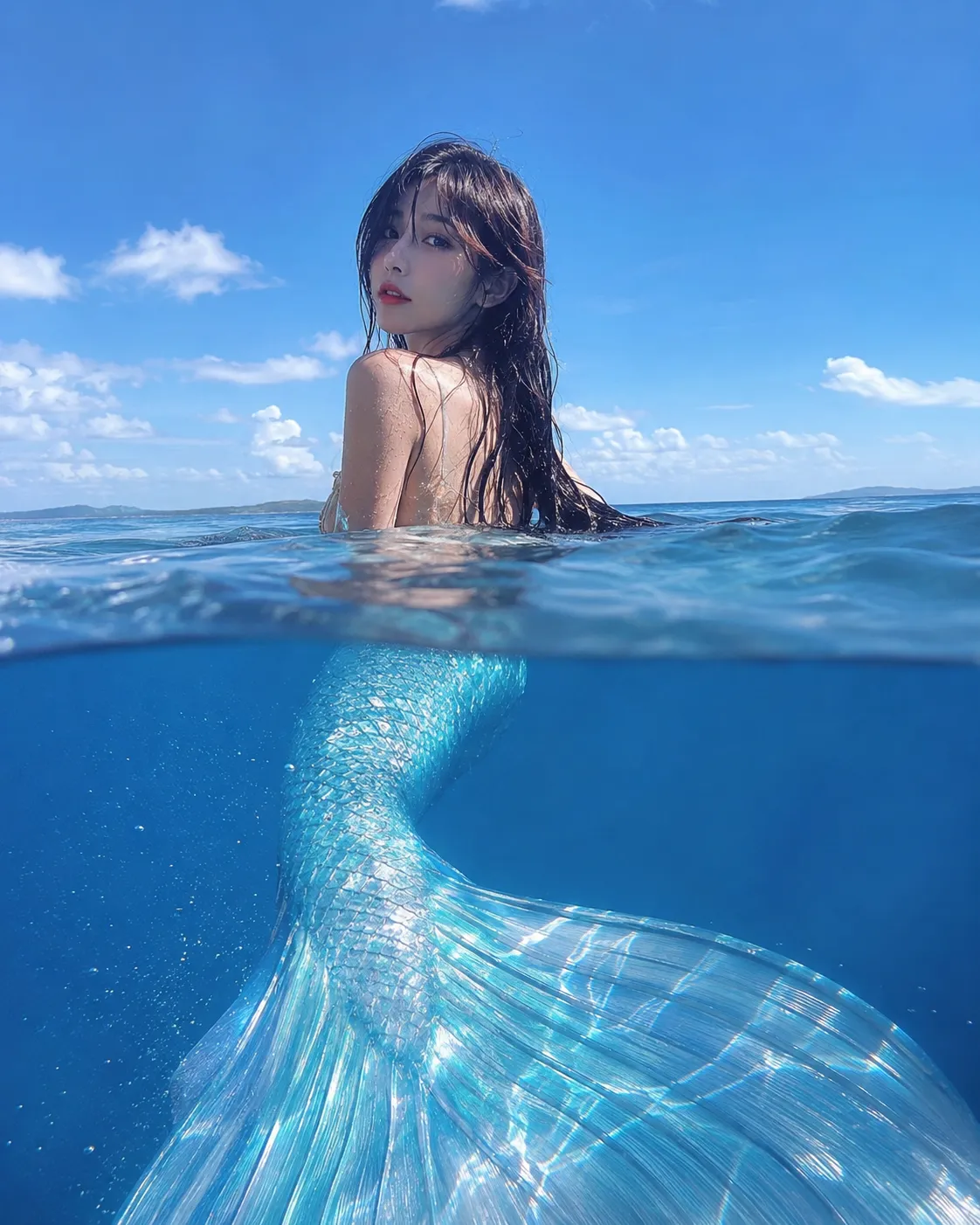
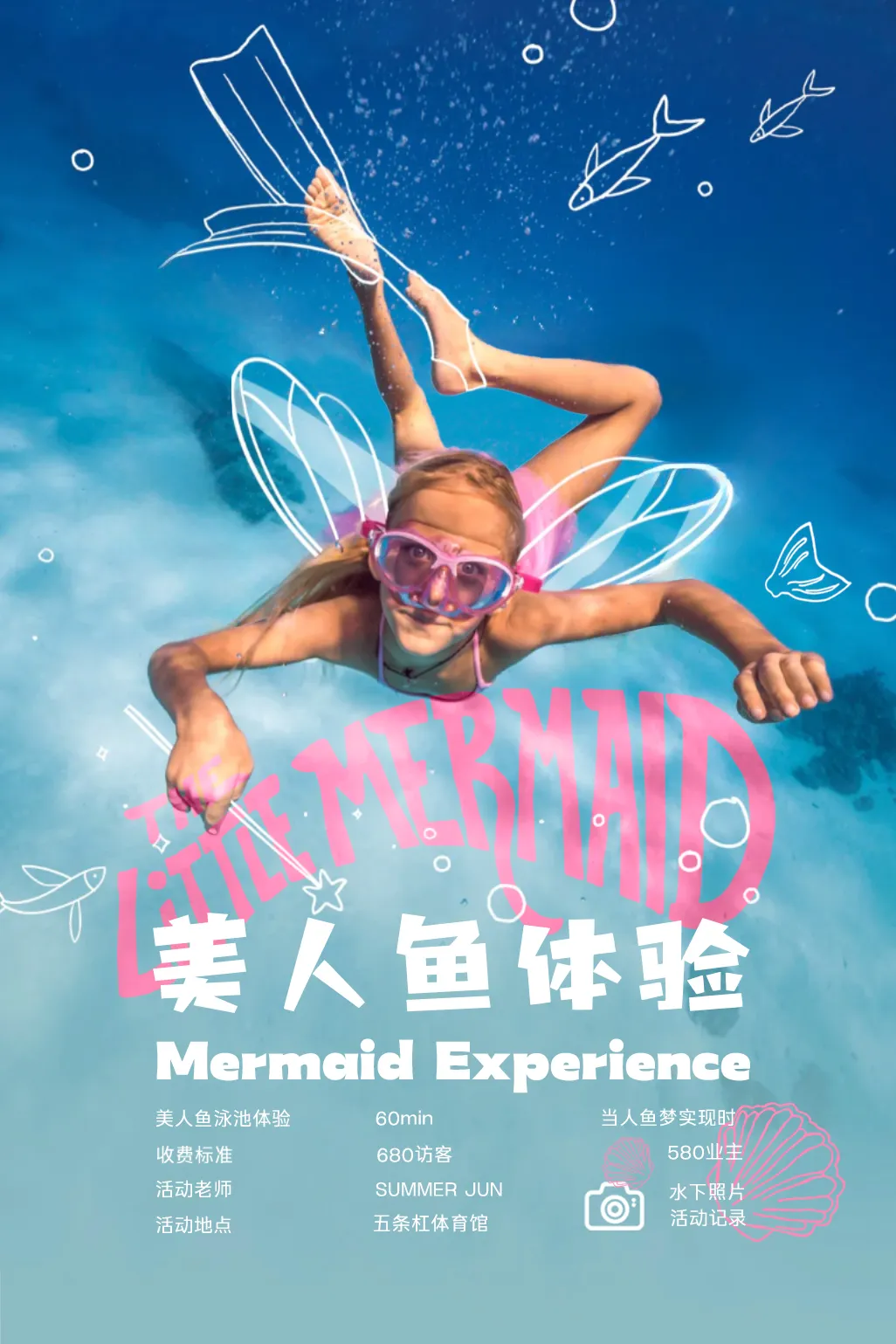
First, the question you most want answered: Is mermaid diving just “putting on a tail and posing underwater”?
No. It is a legitimate underwater sport.
Mermaid diving combines freediving breathing techniques with dance-based body expression. You wear a monofin tail and complete underwater swimming and linked movements on a single breath. It is not about depth; it is about posture, rhythm, and your presence in the water.
Many people get in the water for the first time and, the moment they put on a tail, discover they can be this relaxed.
These 3 types of people are especially suited to learning mermaid diving
1. People who like water but are a little afraid of it
Mermaid courses start in shallow water, with an instructor by your side. Movements begin with floating and progress gradually. Many people overcome their anxiety around water through mermaid diving—because the tail gives you the illusion that “I am free in the water,” and this illusion helps you relax.
2. People who want underwater photos but do not want to get certified
If you just want to take a set of nice underwater photos as a keepsake, a mermaid experience course is more direct than getting a freediving certification. In half a day, you put on a tail, complete basic movements under instructor guidance, and a photographer captures them. You will not become a freediver, but you will have a set of photos of “me looking like a fish in the water.”
3. People who like dance or yoga
The core of mermaid diving is not “holding your breath”; it is “posture.” If you have a dance or yoga background, you will find the feeling of controlling your body in water faster than most people. Many dancers find after getting in the water that their breath-hold time is not long, but the fluidity of their movements makes up for it—because you already know how to express yourself with your body.
Can I learn if I cannot swim?
Yes, but with a prerequisite.
The prerequisite is: you are not afraid of water. If you can put your head underwater in shallow water without panicking, you can start with an experience course. During the course, the instructor stays with you the whole time, and all movements take place within a range you can control.
But if you cannot swim at all and are afraid of water, it is recommended that you first take two basic swimming lessons. This is not to swim well, but to help you stay calm in the water. Nervousness is the biggest enemy of breath-holding, and matters far more than lung capacity.
How should I choose equipment?
You do not need to buy anything at the beginning. Both experience courses and structured courses provide equipment rental.
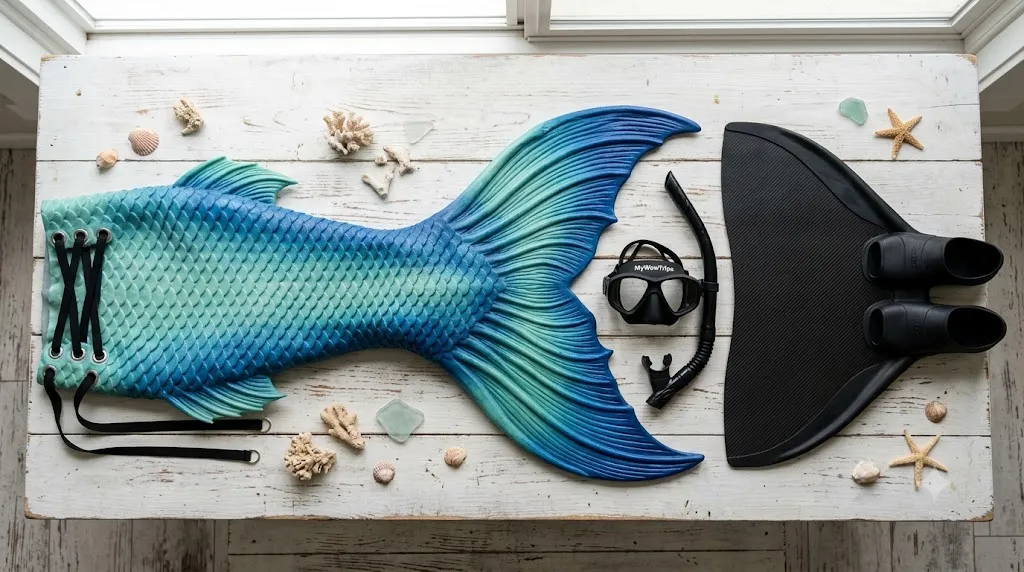
If you are sure you want to continue, a fabric tail (¥300-800) is recommended for beginners. Its advantages are that it is light, easy to put on and take off, and suitable for beginners practicing movements. Silicone tails (¥1500-3000) are more realistic, but they are harder to put on, heavy, and require more leg strength. It is recommended to consider one only after completing at least an introductory course.
What do you learn in the course?
For example, the SSI mermaid course (2-3 days):
Theory: safety knowledge, equipment use, basic breathing techniques
Pool training: tail swimming movements, surface floating, underwater posture control
Assessment: complete a designated sequence of underwater movements
Not all courses require you to have a freediving certification first. The experience course is open to complete beginners.
Common questions
Q: Can men learn mermaid diving?
Of course. Mermaid diving is a gender-neutral sport. Whether you wear a tail is your choice, not a question of gender.
Q: Is mermaid diving dangerous?
Under the guidance of a professional instructor, it is safer than doing squats in the gym. The biggest risk is “holding your breath too long.” A good instructor will repeatedly emphasize: do not push yourself; come up as soon as you feel you need to breathe. This is not a competition.
Q: How much does it cost?
Experience course 500-800 yuan (half day). Structured course 2000-4000 yuan (2-3 days). Prices depend on the city, venue, and instructor level.
Mermaid diving is not a fairy tale; it is a sport you can learn. The moment you put on a tail, you will understand why so many people love it—not to become a character in a fairy tale, but to find a new way of expressing your body in the water.
If you are just curious, start with a half-day experience course. If you like it, then consider a structured course. You do not need to decide whether to become a “professional mermaid” before your first time in the water.