What to Wear Under a Freediving Wetsuit
 What to Wear Under a Freediving Wetsuit
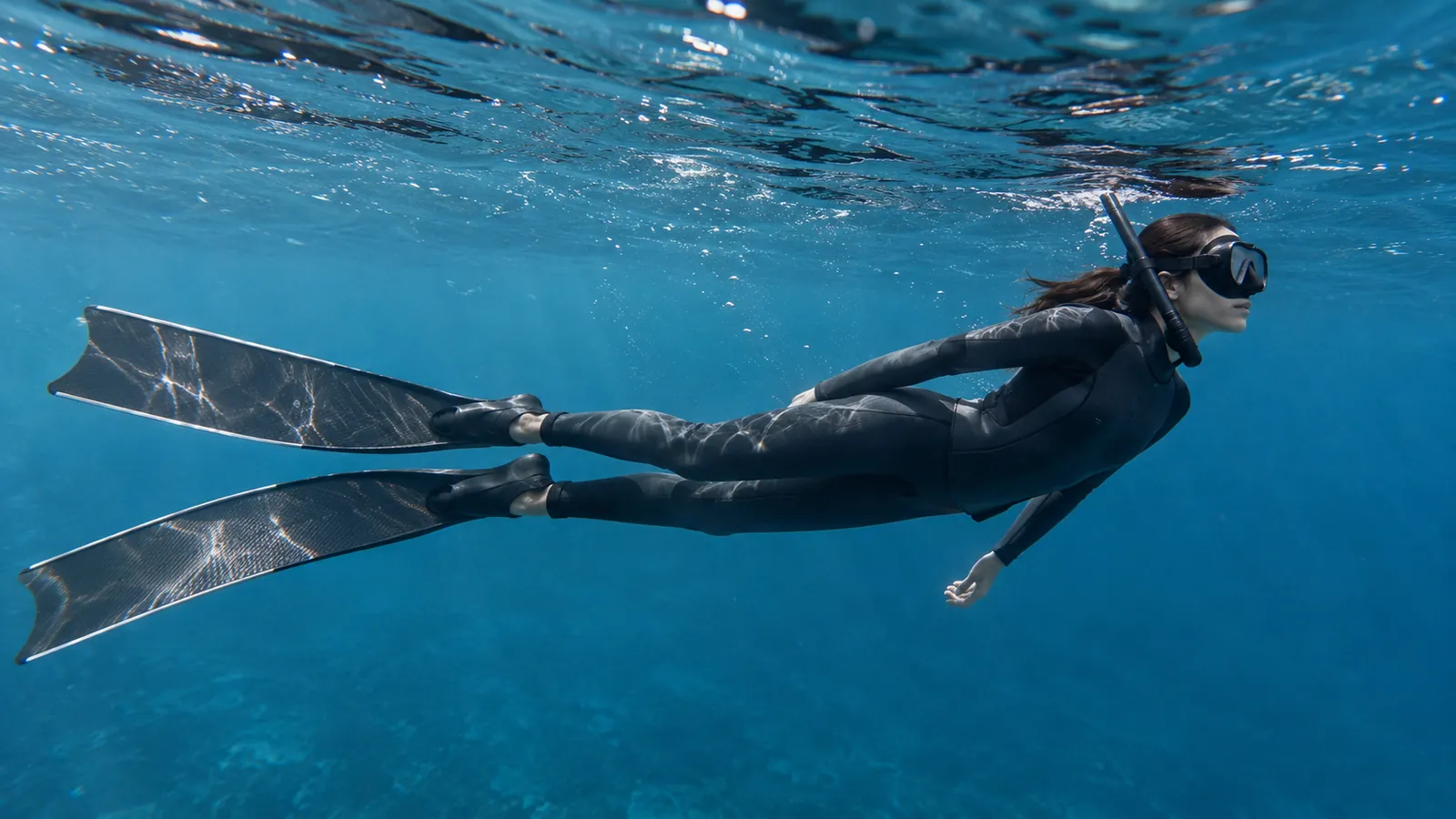
Before putting on a freediving wetsuit for the first time, I lingered in the changing room for a long time.
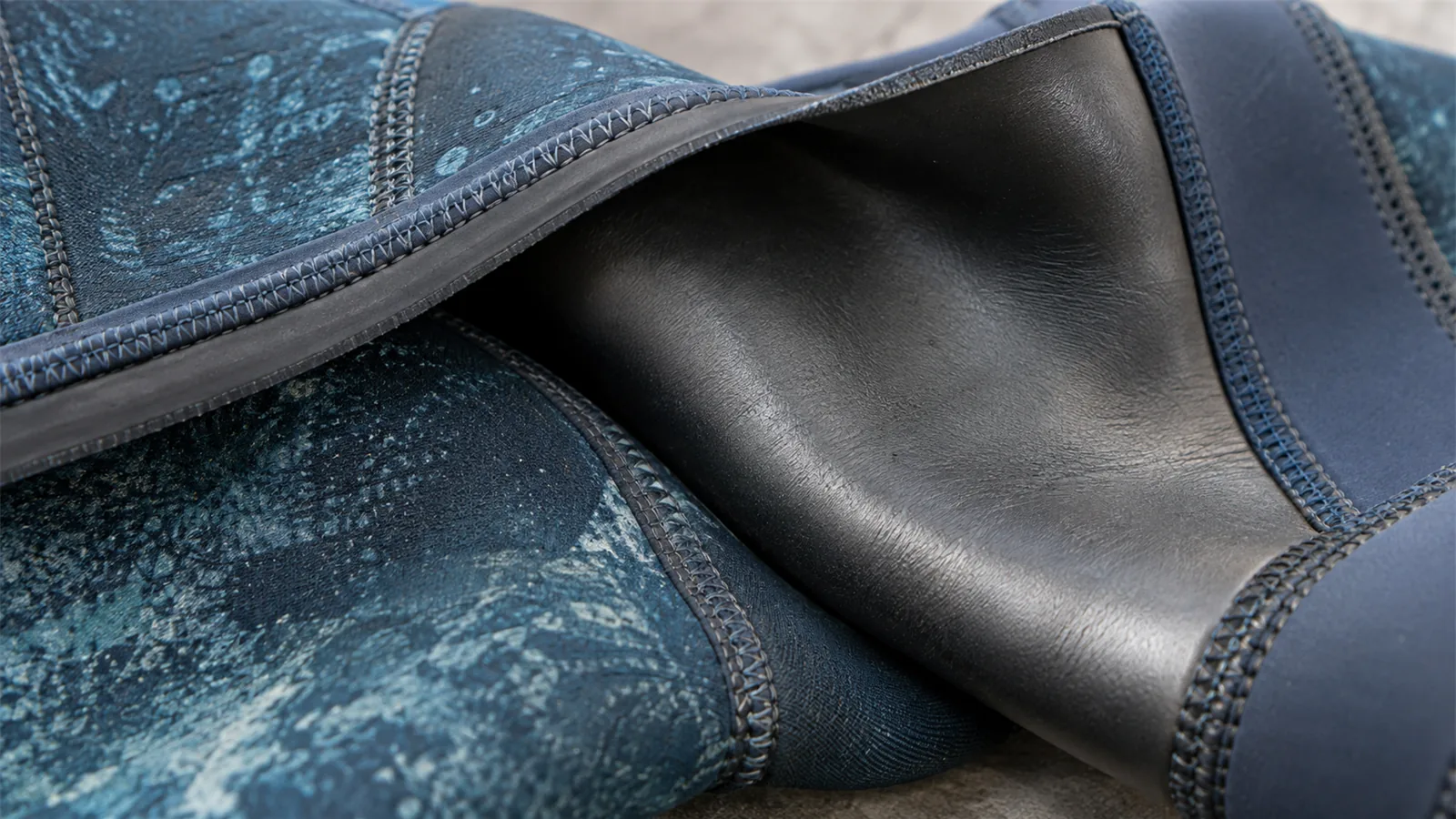
The lining was smooth, like touching a rubber glove. I had only one question in my head: do you wear this directly against your skin?
Later I found that almost everyone putting on an open-cell wetsuit for the first time gets stuck on this point — they just feel awkward asking.
First, the rule: open-cell linings are usually worn against the skin
A wetsuit keeps you warm through the thin layer of water trapped inside that is warmed by your body heat. An open-cell lining works by sitting against the skin, keeping water exchange to a minimum — if you wear an extra layer underneath, water circulates through the gaps in the fabric and that insulating layer of water cannot be maintained. So manufacturers usually recommend that an open-cell lining touch the skin directly.
But it is not an absolute taboo. Some manufacturers explicitly allow pairing the wetsuit with specific thin liners; if you add a layer yourself, choose one that is thin, close-fitting and free of rough seams. Do not wear anything with zippers or thick stitching.
Nylon-lined wetsuits are different. The inner layer is fabric to begin with, water exchange is much greater, and warmth comes from thickness. Wearing a swimsuit underneath is completely fine, and it makes the suit easier to put on and take off.
Whether you can wear an underlayer depends on the actual lining construction, cut and manufacturer's instructions for your wetsuit — not on the price, and not on the water temperature. Check the instructions before you buy, or just ask the shop.
How to wear it in practice
With a nylon lining, women are better off wearing a one-piece swimsuit than a bikini — a bikini rolls up inside a wetsuit and getting it on is miserable. The same goes for men: swim trunks roll up, and many people simply wear nothing. Some wetsuits have a crotch construction designed for exactly this.
As for whether to add an extra thermal layer, there is no general rule like "above a certain thickness you don't need one" — it depends on the water temperature, how long you plan to stay in the water, how well you tolerate cold, and how snugly the wetsuit fits. The same 5mm suit is a completely different experience in Southeast Asia at 28℃ and in the East China Sea at 20℃.
Two pitfalls nobody warns you about
Don't use just any lubricant. Open-cell linings are hard to put on, so use the donning lubricant recommended by the manufacturer first. If you use soapy water or conditioner, always dilute it thoroughly, avoid high-concentration cleaners, oil-based products and irritating fragrances, and rinse it off completely afterwards. Some people are allergic to fragrance, and after two hours in the water their skin becomes very uncomfortable.
Fingernails are a wetsuit's natural enemy. Open-cell linings are fairly delicate, so small cuts should be repaired as soon as possible with neoprene-specific glue — don't put it off. If the damage is larger, have it repaired by a professional. I cut mine the first time I put it on, and my instructor took one look and said, "This suit just lost half a year of its life." Since then I have gotten into the habit of trimming my nails first.
Don't drink less water just to avoid bathroom breaks
Open-cell linings are a hassle to put on and take off, so many people drink less water before getting in.
Do not deliberately restrict your fluid intake. Staying normally hydrated helps with comfort and physical performance. To be clear, though: hydration is not a means of equalization, and it cannot be used to prevent decompression sickness — if you cannot equalize, the only correct action is to stop the descent immediately and ascend. No exceptions.
A few questions that come up often
Q: Can you really wear nothing under an open-cell lining? Not even underwear?
It is usually not recommended. The reason is the same as with a swimsuit: an extra layer can break the seal. But go by your wetsuit manufacturer's instructions — some brands do have approved dedicated liners. If you really cannot get past it mentally, choose a nylon-lined wetsuit — you have to choose between performance and modesty.
Q: What about urinating in the wetsuit — is that okay?
Technically yes, and many people have done it. But don't just think "rinsing it out is enough" — urine can irritate the skin, and over time the wetsuit will hold an odor. For a rented wetsuit, check the operator's rules first, and after you get out of the water, clean and disinfect it as they require.
Q: Can women dive during their period?
Generally yes. Use a tampon or a menstrual cup, not a regular sanitary pad (it stops working once it gets wet), and change it as often as the product requires. But if you have significant menstrual pain, dizziness, migraine or abnormal bleeding, don't dive that day. As for the relationship between menstruation and decompression sickness risk, research findings are not consistent; if it concerns you, ask your instructor directly.
Q: What if I'm not comfortable with the hygiene of a rented wetsuit?
Choose one that the rental operator has already cleaned and disinfected, and ask them directly how they do it. If you still mind, bringing your own ultra-thin Lycra liner is the next best option — you sacrifice a little warmth and sealing in exchange for peace of mind. Also, smell the suit when you pick it out: if it smells musty or otherwise off, ask for a different one.
A few more things that aren't about what to wear, but that must be said
- Always dive with a trained buddy; never do breath-holds in the water alone
- Never hyperventilate; it erases your body's only warning of low oxygen
- Don't go beyond your training limits; if you cannot equalize, ascend
- After changing wetsuit thickness or style, always redo your buoyancy check and re-adjust your weighting
Finally
Every time I put on an open-cell wetsuit on a boat, I still think whoever designed it probably never wore one — the space is small, the boat is rocking, and you end up doing something like yoga.
My current solution: apply lubricant in advance, fold the inside of the legs out a little, and sit down and slide one leg in at a time. It saves two or three minutes. That's about it.
If you have a better method, tell me. I really haven't found an elegant answer to this one.