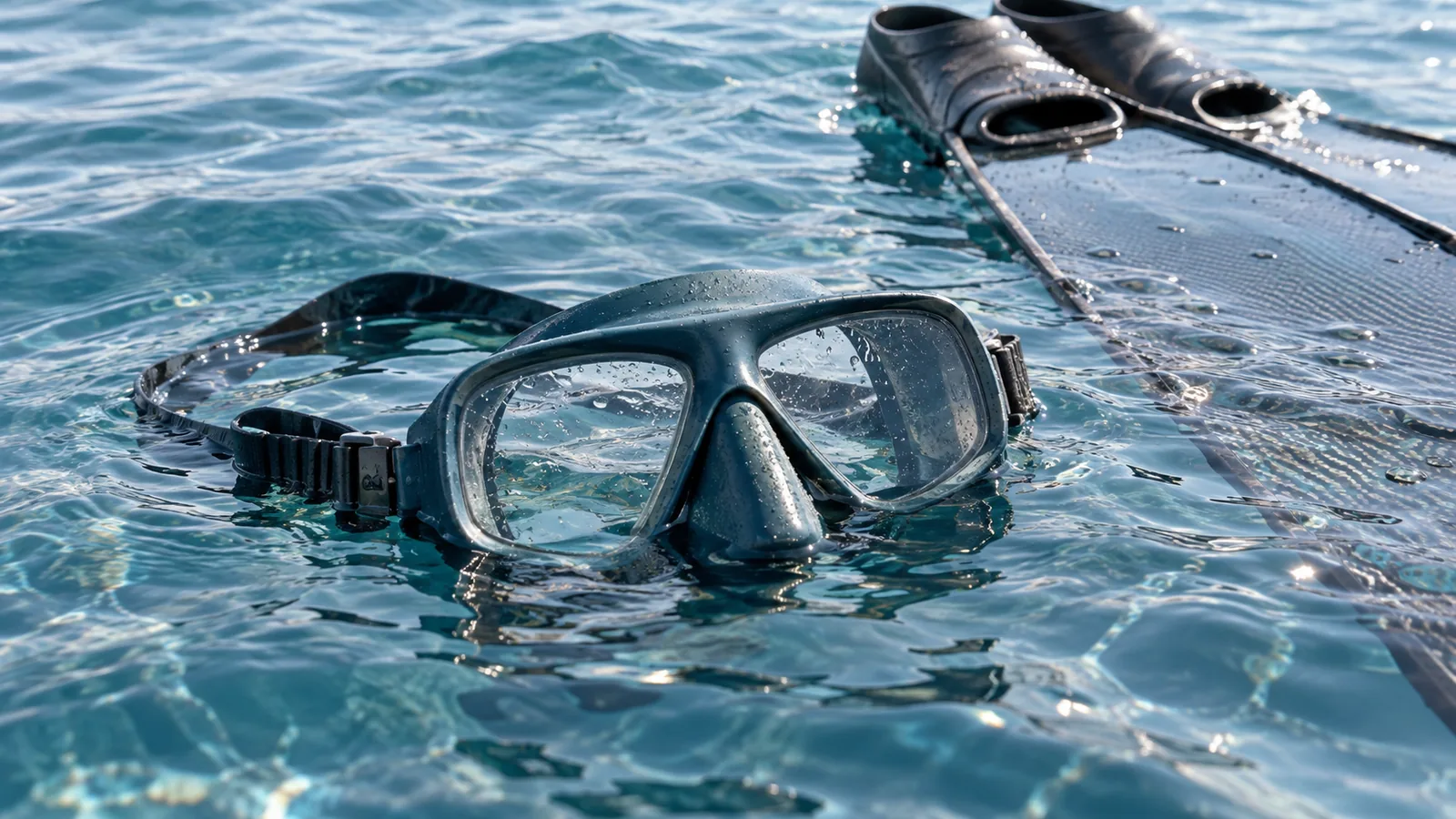
How to Choose a Freediving Mask | Low Volume, Skirt Fit, and Anti-Fog Guide
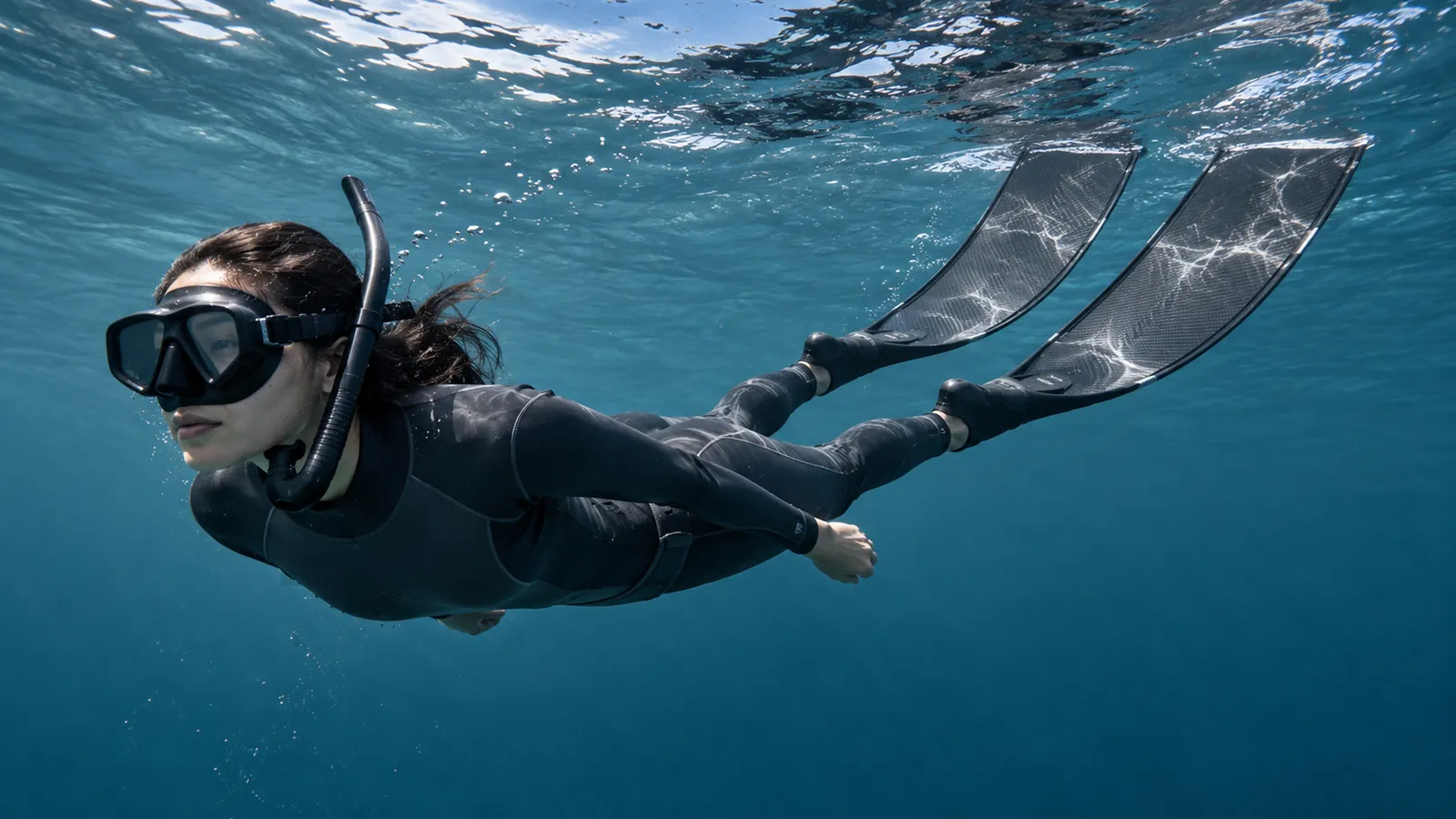 How to Choose a Freediving Mask | Low Volume, Skirt Fit, and Anti-Fog Guide
Let's answer the question you care about most first: what is the difference between a freediving mask and a snorkeling mask? The core difference is internal volume — a freediving mask needs to be "low volume," because on descent you add air into the mask to equalize pressure; the smaller the volume, the less air you need to add. Take a big, wide snorkeling mask underwater, and you will find yourself equalizing your ears while also blowing air into the mask, and the deeper you go, the harder it gets.
But let's be clear first: low volume is not a "qualification threshold," but a choice that saves air and effort. A high-volume mask can also be used for diving; it just requires more added air and has higher resistance. This article explains: where the volume difference lies, how to choose a skirt that does not leak, how to anti-fog effectively, and the points where beginners most often buy the wrong mask.
Why Low-Volume Masks Are More Recommended for Freediving
That small pocket of air in the mask is also compressed underwater. The greater the depth, the more the air inside the mask is compressed, and the mask is "sucked" onto your face — this is mask squeeze, which in severe cases can rupture capillaries around the eyes and cause bloodshot eyes.
The solution is to exhale air through your nose into the mask to add air to it. And that air has to come from your lungs:
| Mask type | Approximate internal volume | Air to add during descent |
|---|---|---|
| High volume (snorkeling/wide-view models) | Large | A lot; noticeably harder even at modest depth |
| Low volume (freediving models) | Small | Little; takes almost none of your lungs' precious air |
Adding air should be proactive, early, and in small amounts several times. During the descent, add a little as soon as you feel pressure building, rather than waiting until the mask is sucking so hard that your eyes feel swollen.
If you have already over-squeezed: if you have pain around the eyes or blurred vision, stop the descent and ascend immediately, and end the dive; if pain, swelling, bleeding, or vision abnormalities persist, seek medical evaluation as soon as possible — mask squeeze is not just "a bit uncomfortable."
Three Hard Criteria for Choosing a Mask
1. Skirt fit: the only truly important criterion
Whether a mask leaks has nothing to do with brand or price; it only has to do with your face shape.
How to try it on (you can do this in the store):
- Gently place the mask on your face, without putting the strap over your head; let it hang in front of the lenses and do not tighten it;
- Gently inhale through your nose, then hold your breath;
- The mask should stay on your face by itself without falling off;
- If it releases after a few seconds, or air leaks at the edges, try the next one.
Do not forget to move aside hair, headbands, and head scarves — a single hair can ruin the seal.
2. The nose pocket must be pinchable
In freediving, adding air to the mask and equalizing your ears both require you to be able to close your nostrils. Frenzel equalization is one of the most commonly used equalization methods, but it is not the only one; no matter which method you use, the nose pocket must let you pinch it and pinch it comfortably.
If the nose pocket is too shallow, too hard, or blocked by the skirt, you cannot pinch it at all, and equalization becomes impossible. After putting on the mask, try it: can you easily pinch your nostrils, and can you make a puffing motion? This step is more practical than anything else.
3. Lens and frame
- Prefer tempered-glass masks from reputable brands; there are also high-strength composite lenses that meet the manufacturer's safety specifications, but do not buy acrylic lenses of unknown origin (they scratch easily, distort optics, and may crack under pressure);
- Single-lens vs. dual-lens: a single lens gives a slightly better field of view, while dual lenses fit the face more closely. Volume is mainly determined by the skirt and nose pocket design and is not necessarily related to single/dual lens — when choosing, look directly at whether it is labeled "low volume," and do not just count the lenses;
- Drain valve: it is not absolutely unusable, but it adds structural complexity and volume. Freediving usually favors simple low-volume models without a drain valve;
- For nearsightedness, optical lenses can be fitted, or nearsighted film inserts can be attached inside the lens (note that inserts affect the field of view and anti-fog slightly).
Anti-fog: three effective methods, one misconception
New mask lenses often have manufacturing residue or a protective film on the inside, and if not treated, they fog easily, regardless of your anti-fog technique.
- Clean according to the manufacturer's instructions: generally, you can use non-abrasive toothpaste or a dedicated cleaner and gently rub it in circles on the inside, rinse clean, and repeat 2–3 times. Only treat the inside; do not touch the outside, to avoid scratches; if the manufacturer explicitly states coating restrictions, follow the manufacturer's instructions.
- Apply anti-fog before entering the water: a dedicated anti-fog solution, or the most basic option — saliva. Spread it evenly, rinse briefly (do not rinse it off completely), and put the mask on immediately.
- Never apply sunscreen or grease to the lens, and do not repeatedly touch the inside with your hands; one grease contamination is enough to keep it fogged for a whole day.
A common misconception: burning it. Those online methods of "using a lighter to burn off silicone oil from the lens" are very dangerous — neither the lens nor the sealing gasket can withstand it; if you burn it, it is ruined.
These "bonus features" actually need careful thought
- Mounting an action camera on the mask: the frontal area becomes larger, drag increases, both descent and ascent become more strenuous, and it can easily be shifted by water flow. If you really want to film, use a handheld mount or have someone else film.
- Ultra-wide-angle, large-field-of-view models: good field of view, but large volume, the opposite of what freediving requires.
- Tinted lenses/coatings: not just appearance — they change light transmission, glare control, and contrast; some coatings are also more prone to scratching, so think clearly about what environment you will use them in before buying.
- Wearing the strap too tight: tightening it does not make the skirt seal better; instead, it can deform the skirt, causing leaks and pressure marks. Fit depends on the skirt, not the strap.
Maintenance
- After every dive, rinse with fresh water, especially the gaps between the skirt and the lens frame;
- Dry in the shade; do not leave it in direct sunlight — UV and high heat make the silicone skirt age and harden faster;
- Do not cram it into a bag together with fins and weights; lens scratches cannot be repaired;
- When flying, do not place the mask where it can be crushed.
Common Questions FAQ
Q: Do I have to buy an expensive mask? A: Not necessarily. Face fit matters far more than price. A low-volume mask that costs 200 and fits your face shape exactly is more usable than one that costs 2,000 but keeps leaking.
Q: What if I cannot pinch my nose with the mask on? A: First check whether the skirt is too stiff or the nose pocket too shallow; try a different model. If your hands are small and the nose pocket is on the large side, try a style with a narrower nose pocket. If you cannot pinch your nose, you cannot equalize, and depth is out of the question.
Q: My mask always sucks onto my face when I go a bit deeper. Is the mask too big? A: Not necessarily. More common causes are not adding air in time, the mask not fitting your face well enough, or a blocked nasal passage. First check whether you are adding air early and in small amounts several times; if you always need to add a lot, then consider switching to a lower-volume model. If you cannot add air, or pain starts around your eyes or your vision becomes blurry, stop the descent and ascend immediately, and let your buddy know your situation.
Q: Can I dive with contact lenses? A: Some divers can use soft contact lenses, but the mask seal must be ensured and the lenses must not come into contact with water; for rigid or rigid gas-permeable lenses, consult an eye care professional first. If pain, redness, or blurred vision occurs, stop diving immediately and seek medical care.
Q: I have a beard and my mask keeps leaking. What should I do? A: A beard does break the seal, and applying silicone grease does not reliably fix the leak. More practical approaches are: trim the strip of beard affecting the seal, try on other models again, or choose a model with a thicker skirt and a larger sealing area.
This article is for general information only and does not constitute purchasing or training advice. Freediving is a high-risk activity; learn under a certified instructor; if you cannot equalize, ascend — do not force it — and always follow the buddy system.