Is Freediving Dangerous?
No, but its risks are different from those of ordinary swimming.
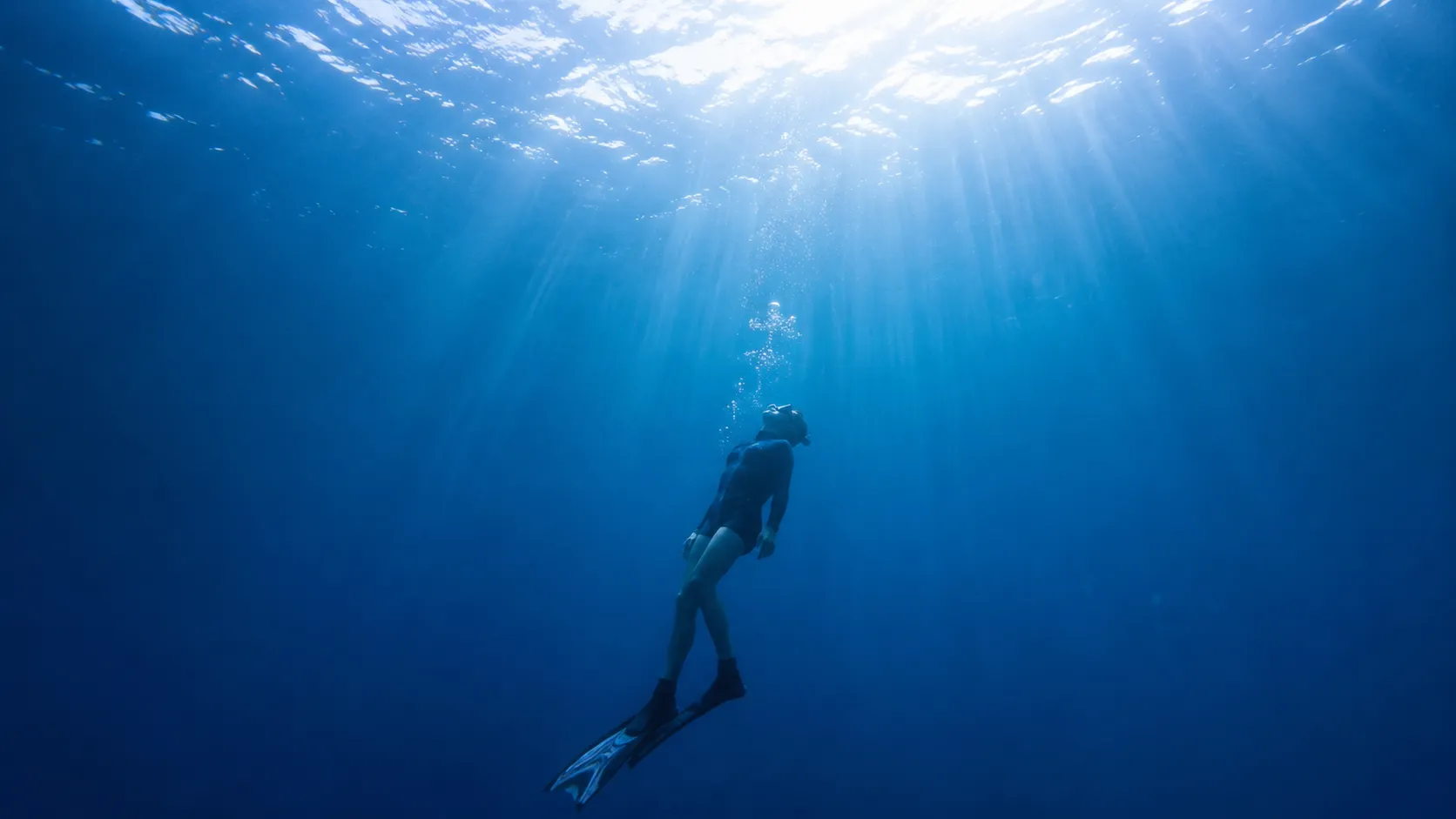
Freediving has no tank — that is part of its appeal, and also where the risk lies. This article is not meant to scare you. It is meant to help you know what to guard against, and how, before you descend.
Shallow-Water Blackout (BO): No Warning, Most Deadly
BO is the leading cause of death among freedivers. It does not happen in deep water; it usually happens in the final stage of the ascent — especially in the last 3-5 meters below the surface. When oxygen in the lungs drops to a critical point, the brain is suddenly deprived of oxygen, and a diver can lose consciousness with no warning at all.
Key fact: BO does not pick its victims. World record holders and beginners can both experience it. Not because you are "not good enough", but because the oxygen supply to the brain is not enough to maintain consciousness.
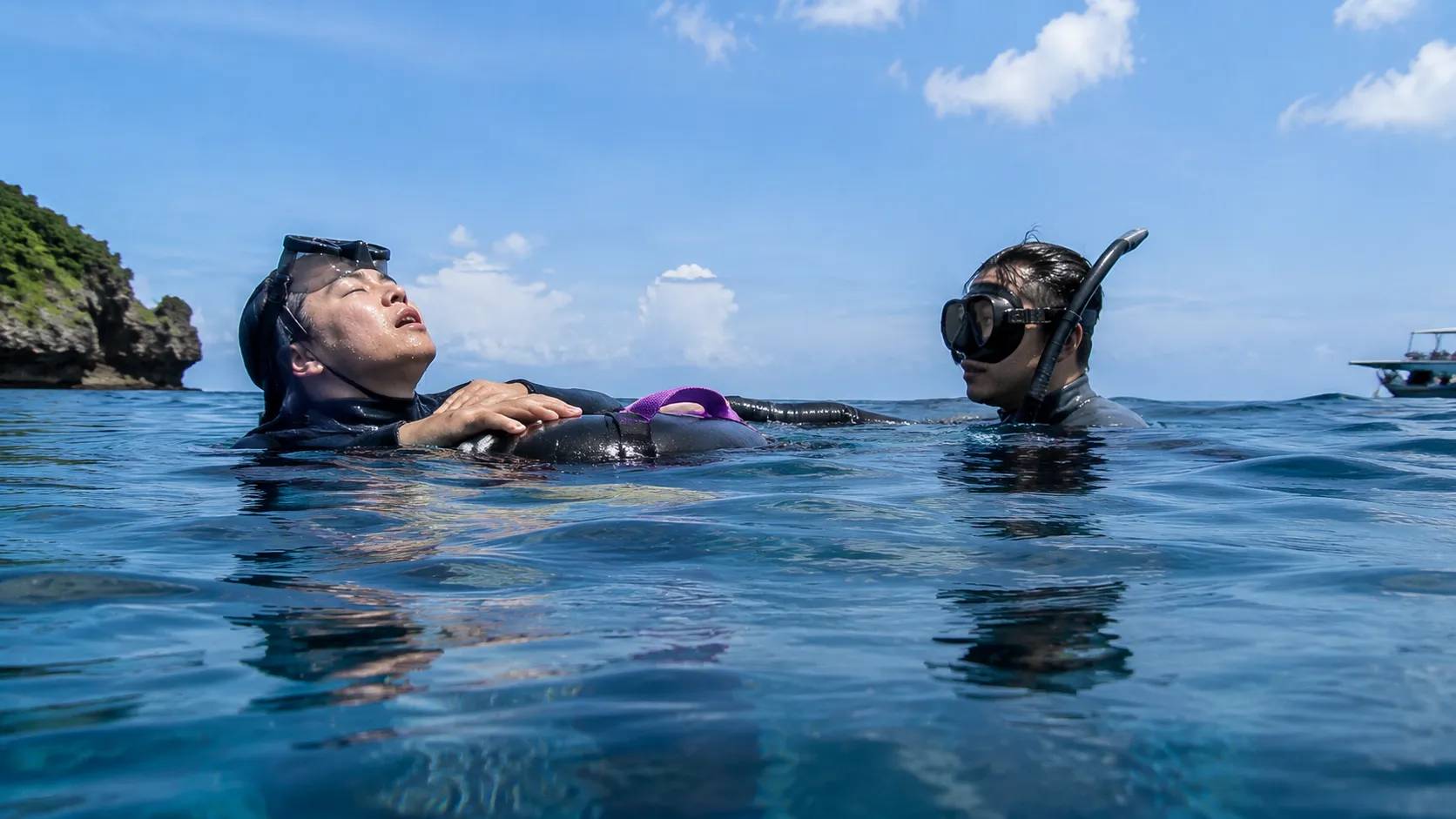
The golden rule for preventing BO: never dive alone. Once BO happens, only a buddy can save you. Freediving without a buddy is not bravery; it is a risk.
⚠️ Note: Some people show signals before BO, such as blurred vision, tunnel vision, or a false sense of security that "everything is fine". But these signals do not appear every time, and there may not be time to react. Do not rely on "I feel fine" to judge whether you are safe.
Lung Squeeze: Most Serious, Most Irreversible
The cause is simple: the lungs are compressed during the descent. If you descend too fast, or go deeper than your body can tolerate, lung tissue can be injured.
Symptoms: chest pain, coughing up blood, difficulty breathing. If you cough up blood at the surface, seek medical evaluation immediately, no matter how shallow the dive. Do not assume that "a short rest will fix it".
Prevention: do not push through it. If you feel pressure in your lungs, ascend a little. If the pressure does not go away, end the dive. Depth is not something to break through; it is something to enjoy.
Decompression Sickness: Freedivers Can Get It Too
Many people think decompression sickness only happens in scuba diving. In fact, repeated deep dives followed by rapid ascents can also trigger it.
The difference is that decompression sickness in freediving is usually not caused by a single depth, but by repeated dives combined with too little surface rest. If you dive ten times in a day and rest only one minute at the surface after each ascent, the accumulated nitrogen does not have enough time to clear, and you may be affected.
Symptoms: joint pain, itchy skin, fatigue, numbness.
Prevention: keep your surface rest time. Rest at least three times the dive time after each dive. If you dived for one minute, rest at least three minutes before going down again. This is the lowest-cost prevention measure.
Ear Barotrauma: Where 90% of Beginners Get Stuck
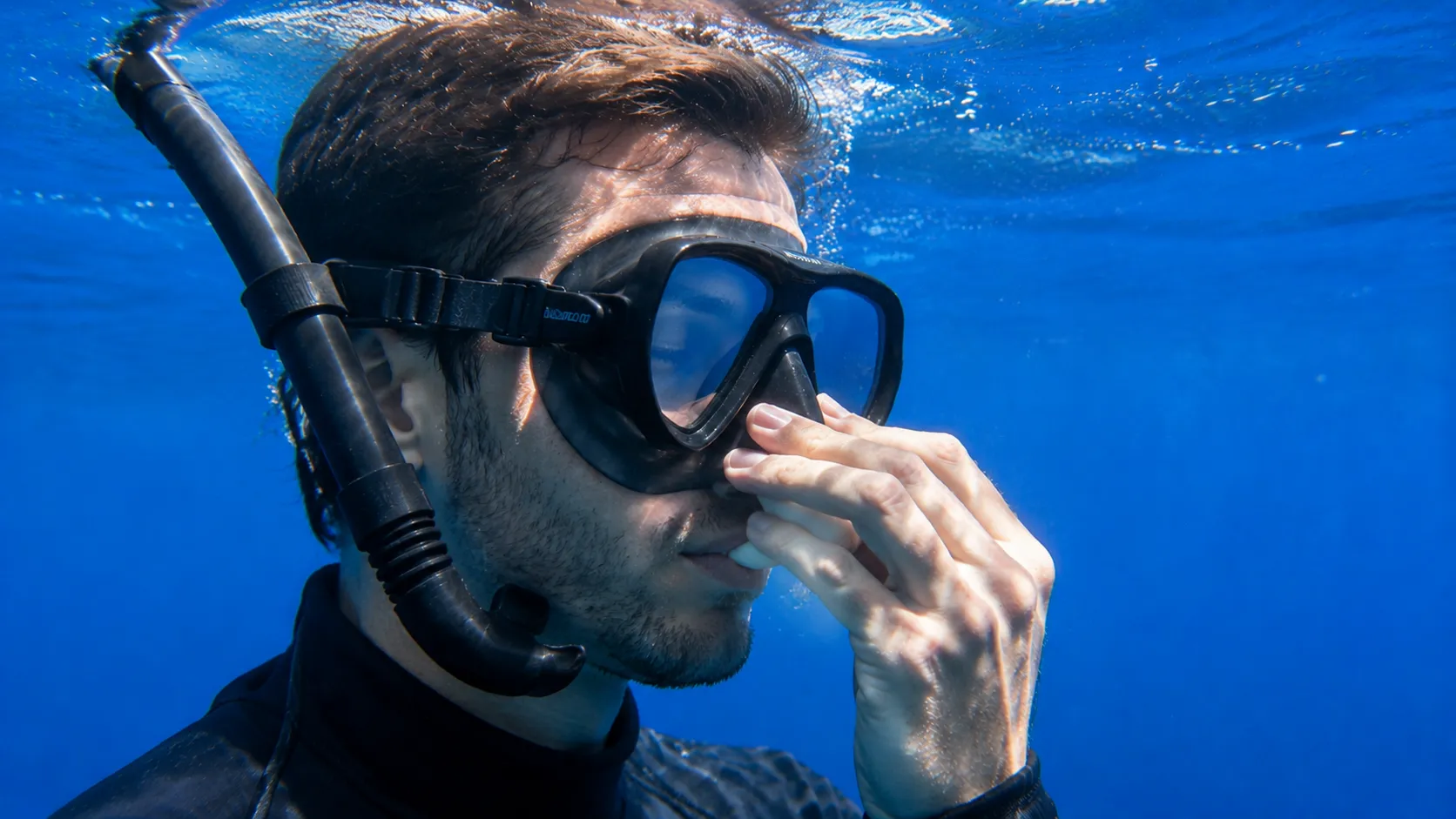
Not because there is something wrong with your ears, but because you have not learned Frenzel equalization.
During the descent, water pressure increases, the air in the middle ear is compressed, and the eardrum is pushed inward. If you do not equalize the pressure, the eardrum keeps being loaded; at best it hurts, at worst it perforates.
Prevention is not "toughing it out" — it is equalizing before you feel pain. Start Frenzel as soon as you begin the descent; do not wait until your ears hurt. If it hurts, the pressure difference has already built up, and equalizing then is much less effective.
Recommended frequency: once every 0.5-1 meters of descent.
Freediving Safety Ranking (by Frequency and Severity Combined)
Risk Type | Frequency | Severity of Consequences | Overall Ranking |
|---|---|---|---|
Ear barotrauma | Very high | Mild → can cause permanent damage | Most common |
Shallow-water blackout (BO) | Low | Fatal | Most dangerous |
Lung squeeze | Low | Can be fatal | Most serious |
Decompression sickness | Very low | Moderate | Requires caution |
For beginners: ear barotrauma is something almost everyone encounters, but it is the easiest to prevent. BO is low in frequency, but if it happens and no one rescues you, it is fatal — so a buddy is the bottom line. Lung squeeze and decompression sickness are very rare within recreational depth ranges (≤40m); with progressive training and adequate rest, they can be almost completely avoided.
Frequently Asked Questions
Q: Is chest tightness normal after freediving?
Mild chest tightness may be normal, but if it persists or worsens, seek medical attention immediately.
Q: Can I keep diving if my ears hurt?
Absolutely not. Ascend a little and equalize again. If it still hurts, end the dive.
Q: What injury are beginners most likely to get?
Ear barotrauma. Not because your ears are weak, but because Frenzel equalization takes practice. Practicing before you get in the water is much faster than forcing your way through during a descent.
Q: How do I know BO is about to happen?
There is no reliable warning. Some people may have signs such as blurred vision or confusion, but you cannot rely on these signals. The only reliable prevention is following the safety rules: never dive alone, do not hyperventilate, and get enough rest.
Risk | Key Prevention Measures |
|---|---|
Shallow-water blackout (BO) | Never dive alone |
Lung squeeze | Do not push through it; ascend if you feel pressure |
Decompression sickness | Surface rest ≥ dive time × 3 |
Ear barotrauma | Start Frenzel from the surface, once every 0.5-1 meters |
The greatest danger in freediving is not descending too slowly — it is running out of air on the way back. But as long as you receive systematic training, follow the safety rules, and dive with a reliable buddy, these risks can be fully managed.