How to Choose Freediving Fins | Long Fins vs Short Fins vs Monofin: Differences and Buying Guide
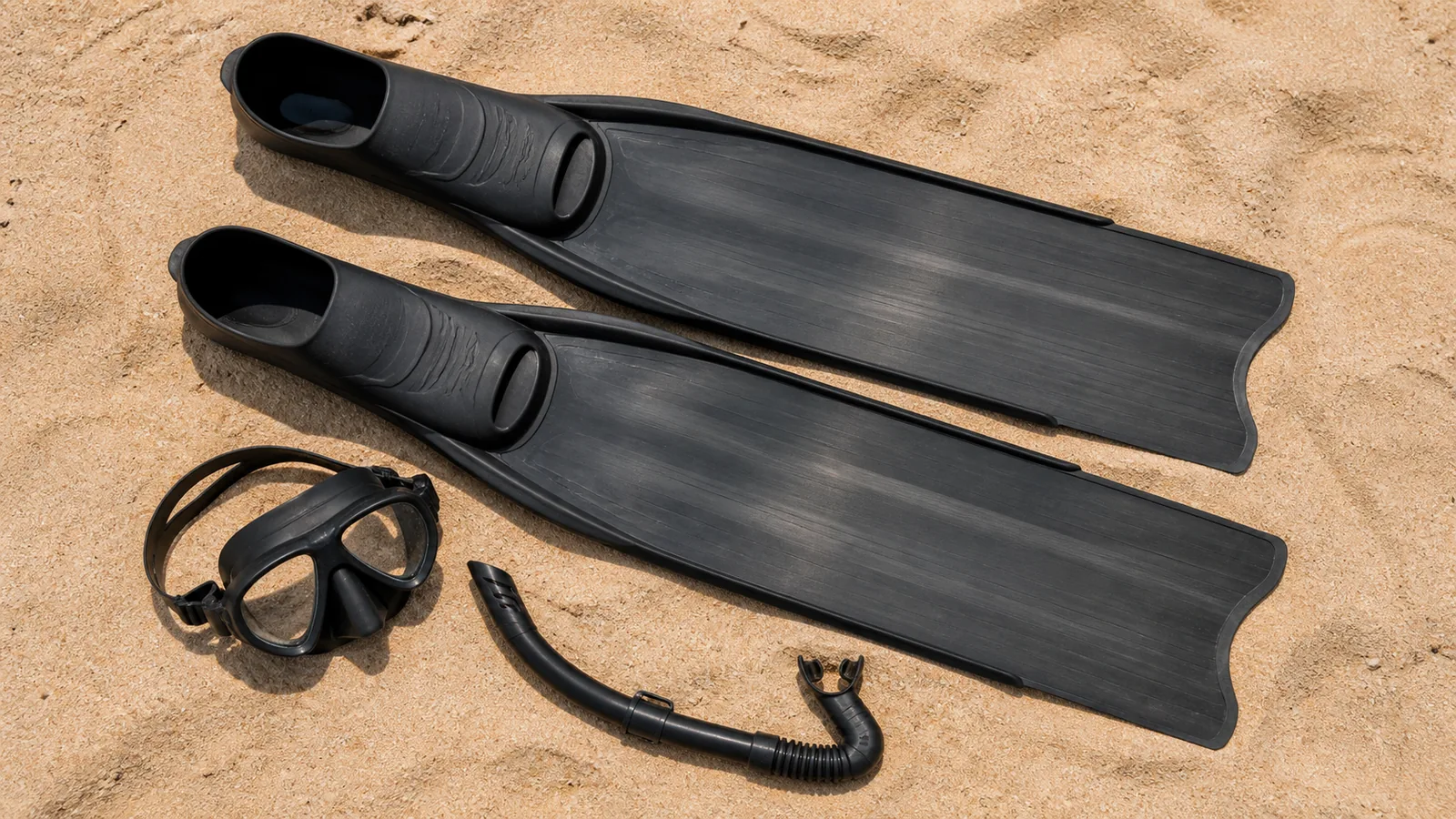 How to choose freediving fins
First, the question you care about most: can you just buy any pair of fins and get in the water? No. Freediving fins are built completely differently from snorkeling and scuba fins — the wrong pair is not only inefficient, it can also affect your posture and your safety. This article helps you sort it out: what long fins, short fins and monofins each do, which pair a beginner should buy, and which pitfalls to avoid.
In one sentence: beginners should choose medium-soft plastic or fiberglass bi-fins, and only consider carbon fiber once their posture is stable and their strength has improved; a monofin is advanced and competition gear, not a beginner option.
Why freediving-specific fins are different from ordinary fins
Freediving fins do only one job: drive your descent and ascent using the least energy and the least oxygen. Scuba fins are short and stiff, suited to short bursts of propulsion and frequent changes of direction; snorkeling fins are softer, suited to slow surface swimming. Freediving fins are extremely long, extremely thin and extremely soft, using the elastic deformation of the blade to store and release energy with every kick, "pushing" you forward like a spring — this is what is called elastic propulsion.
A good freediving fin lets you glide several meters on a single kick; a poor one has you kicking furiously without moving. Underwater, efficiency is oxygen, and oxygen is safety.
The three main types of fins explained
Bi-fins (long twin blades): first choice for beginners
This is the fin most freedivers use for daily training and recreational diving, and it is the standard setup in AIDA, PADI, SSI and other entry-level courses. You wear one on each foot, each foot kicks independently, and the movement is a variation of the breaststroke leg kick — legs straight, small amplitude, power from the hips.
Bi-fins come in three grades by blade material:
- Plastic (Polymer): cheapest and most durable, but poor elasticity and high kick resistance; suited to occasional use or a limited budget. Not recommended for long-term training, because posture tends to become compensatory.
- Fiberglass: the middle grade, with moderate elasticity and good rebound, suitable from beginner to intermediate. Recommended as a beginner's first pair — not too expensive, clear posture feedback, and it builds the correct kicking muscle memory before you move to carbon fiber.
- Carbon fiber: lightest, most elastic, most expensive. Highest rebound efficiency, but on the stiff side; beginners may find it hard to kick, lose posture, or even get calf cramps. It is better to move to carbon fiber once your movement is stable and your strength is there.
Monofin: advanced and competition only
A monofin puts both feet into one large blade and relies on a whole-body wave motion — from shoulders to hips to legs to blade, swimming like a dolphin. It is the fastest stroke in freediving competition, and the standard for mermaid performances.
But a monofin is not beginner equipment. It demands more of your core strength, flexibility, equalization and buddy supervision, and is usually only studied systematically at AIDA 3 level or equivalent. Beginners should not start by buying a monofin — if your bi-fin posture is not yet stable, a monofin will only train a set of compensations into your body.
Short fins / scuba fins: don't use them for freediving
The short fins used in scuba diving (Jet Fin and similar) are stiff, short and heavy, with a high kick frequency, suited to short-range maneuvering while wearing a tank. Using these for freediving is like eating soup with chopsticks — they are extremely inefficient in freediving, and they tend to make you unconsciously increase your kick frequency, wasting oxygen for nothing. Do not use scuba fins as freediving fins.
How to choose fins at a glance
| Type | Stage | Recommended material | Pros | Cons |
|---|---|---|---|---|
| Bi-fins | Beginner → intermediate | Fiberglass | Posture-friendly, moderate price, versatile | Slower than a monofin |
| Bi-fins | Intermediate → competition | Carbon fiber | Highest efficiency, lightest weight | Hard for beginners to handle, expensive |
| Bi-fins | Occasional use / limited budget | Plastic | Cheap, durable | Poor elasticity, risk of posture compensation |
| Monofin | Advanced / competition | Carbon fiber / fiberglass | Fastest, competition standard | High technical barrier, not suitable for beginners |
| Short fins (scuba) | Snorkeling / scuba | Rubber | Good maneuverability | Extremely inefficient for freediving |
Four buying pitfalls for beginners
- Don't be dazzled by the words "carbon fiber": carbon fiber is good, but it is not for beginners. You often see people spend two or three thousand on carbon fiber fins, then find they cannot kick them underwater, end up with calves so sore they cramp, and leave the fins unused. Buy fiberglass first; once you can kick three round trips of pool dynamic apnea economically and easily, then consider carbon fiber.
- The fit of the foot pocket matters more than the blade: if the foot pocket is too big, energy transfer is seriously lost and kicking feels like stepping on cotton; if it is too small, you will get blisters within half an hour. We suggest trying them on with dive socks; the foot pocket should be snug but not pressing, and your toes should not touch the front end.
- Choose "medium-soft" stiffness, not "stiff": stiffer is not better. Stiff fins require more leg strength; beginners on stiff fins → posture compensation → sore calves and lower legs → giving up altogether. Medium-soft stiffness is the most beginner-friendly.
- Don't buy a "mermaid monofin" as a training fin: the monofins used in mermaid performances and monofins used in competition freediving are two different things. The former are designed for visual effect, and their blade shape and stiffness are not suited to freediving training. If you want to learn freediving rather than take photos, choose bi-fins.
FAQ
Q: Can freediving fins and snorkeling fins be used interchangeably?
A: Not recommended. Snorkeling fins are short and soft; freediving fins are long and elastic, and the difference in efficiency is huge. Descending with snorkeling fins, the amount of oxygen you use will leave you tired at just five or six meters deep — this is not your fitness being poor, it is your equipment holding you back.
Q: How much should a first pair of fins cost?
A: Fiberglass bi-fins are usually in the 800-1800 yuan range, and plastic ones in the 300-600 yuan range. Carbon fiber starts at 2000-4000 yuan. We suggest buying fiberglass first; a budget of 1000-1500 yuan is enough.
Q: When exactly should you learn the monofin?
A: Once you can easily complete a constant weight descent of 20-30 m with bi-fins, with stable posture and no equalization problems, ask an instructor whether you are ready to learn the monofin. The monofin's wave-style propulsion needs dedicated instruction — do not teach yourself from videos.
Q: Do fins need maintenance?
A: Rinse with fresh water after every seawater dive, and avoid prolonged sun exposure (UV light ages the blade and makes it brittle). When storing them, it is best to lay them flat or use fin hangers; do not bend the blades.
If you are just starting freediving, the order of equipment investment should be: mask → fins → wetsuit → weight belt. Fins are the piece of equipment most worth the money, because they directly affect the efficiency of every descent. Choose right, and your breath-hold time will naturally get longer — not because you hold your breath longer, but because you use less energy.
This article is for general information only and does not constitute any instructional advice. Freediving is a high-risk activity; please choose equipment and train under the guidance of a certified instructor. If you have health concerns, consult a doctor first.