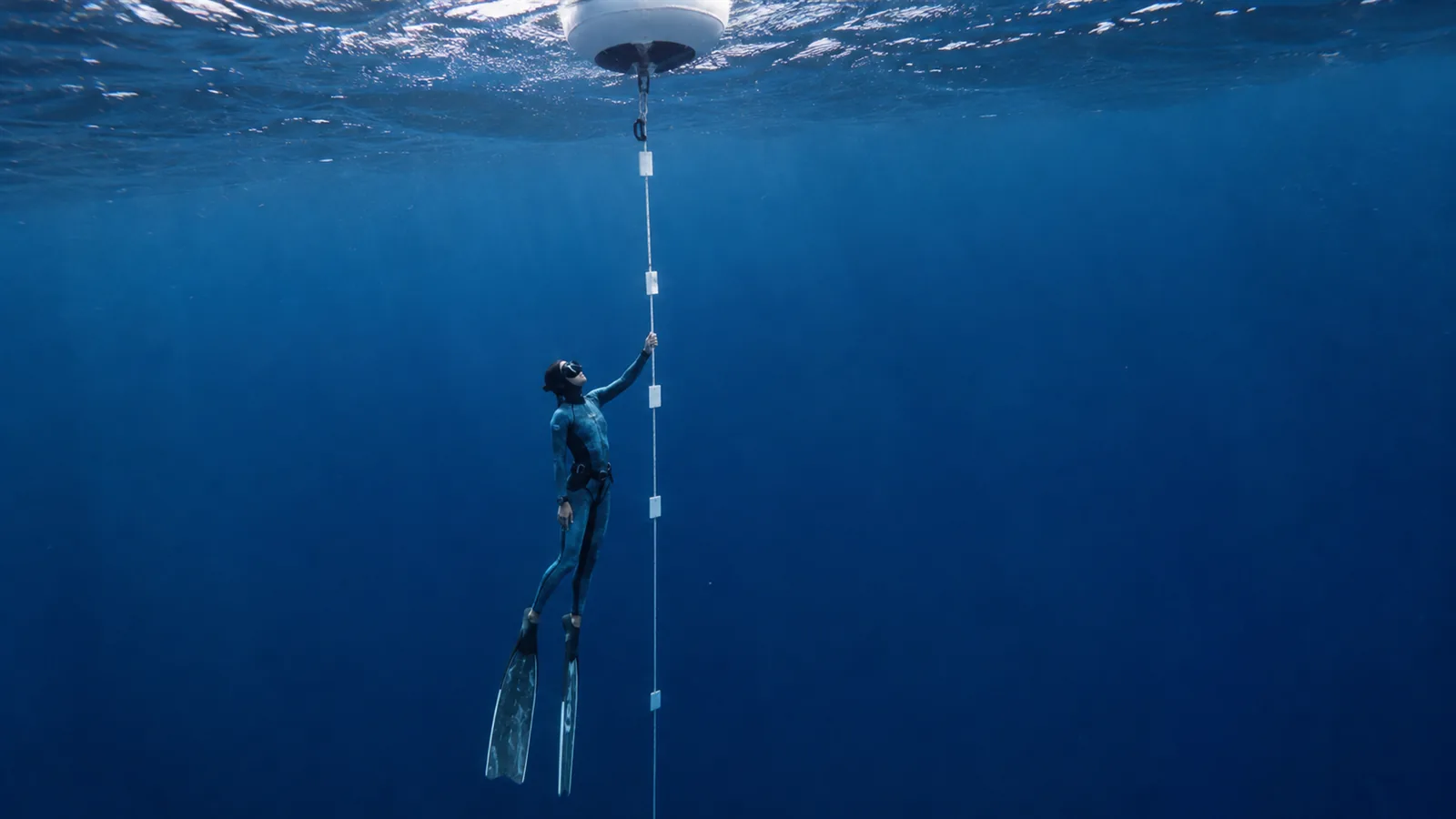
How to Progress in Freediving Depth | The Checkpoints from 10 to 30 Meters
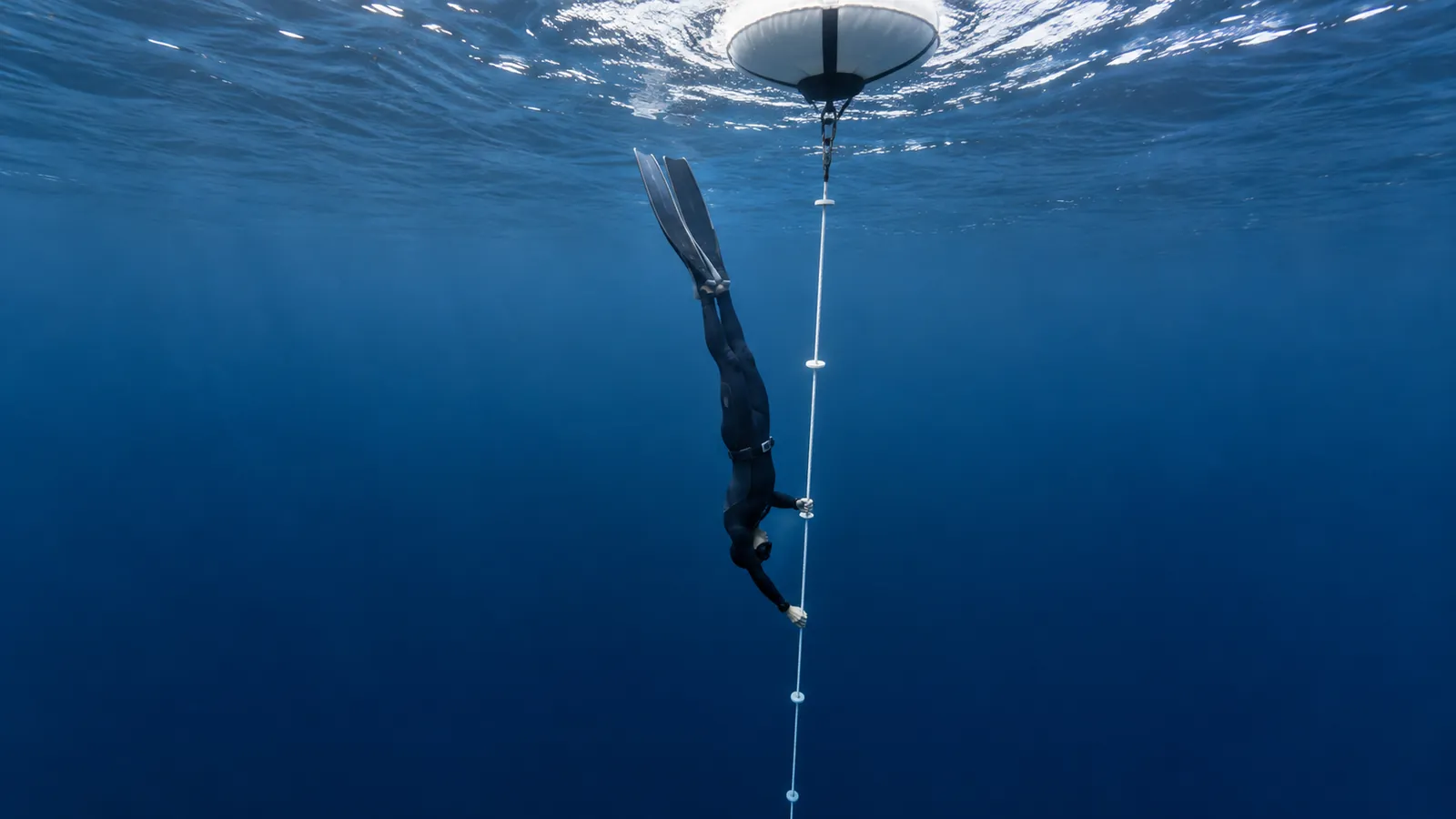 How to progress in freediving depth: the checkpoints from 10 to 30 meters
Someone asked me: how do I get down to 30 meters?
I said that question is backwards. What you should ask is — between 10 and 30 meters, how many hurdles are there, and which one am I stuck on right now?
To be clear: the "checkpoints" below are based on my own experience, not a universal certification standard. Your actual progression should be based on your course requirements, your instructor's assessment, and your personal condition.
Checkpoint 1: Equalization — and It Gets Harder as You Go Deeper
This is where most people get stuck.
During descent, you should equalize early, frequently, and gently, before you feel any discomfort. Near the surface, some people get by with pinching the nose and blowing (Valsalva), but Valsalva should not be the primary method for deep dives — forcing it can cause ear injury. The proper path is to practice Frenzel equalization on land and in shallow water until it is solid.
As depth increases, the air pressure you can use to equalize gradually becomes insufficient. This is where you need mouth-control techniques, such as mouthfill. But there is no universal depth to start that; your instructor should plan it based on your situation.
If it won't clear, it won't clear. If equalization fails, stop descending immediately and come up slightly; if you still can't equalize, end that dive. Forcing it can cause eardrum or middle-ear injury, or worse.
Checkpoint 2: Getting Used to Freefall
Below a certain depth, the air in your wetsuit and body becomes compressed, and you shift from needing to kick to naturally sinking.
This depth varies from person to person — body shape, wetsuit thickness, weighting, lung capacity, and water conditions all play a role. There is no fixed number.
People experiencing it for the first time usually do the same thing: panic, then kick hard, burning all their oxygen in that phase. The correct response is to ease off on movement, keep a streamlined position, and relax.
But this does not mean you can relax supervision: Only practice freefall during line training, with a trained safety buddy supervising, and only after you have mastered rescue procedures.
Checkpoint 3: Re-test Your Weighting in Every New Environment
The first principle of weighting is you must have safe positive buoyancy at the surface — especially if you black out or lose consciousness, you need to be able to get back to the surface on your own.
Your wetsuit compresses and loses buoyancy deeper, so weight that feels right at shallow depth may be too heavy at depth. During ascent, gas expands, buoyancy gradually returns, and the shallow portion may have you floating up faster — you must control your ascent rate.
The key point: when you change wetsuits, switch between saltwater and freshwater, or have a significant change in body weight, re-test your buoyancy. Don't add weight blindly just to make descents easier.
Checkpoint 4: Safety Setup — If You Can't Pass This One, Don't Go Deeper
I'm putting this one last, but it is actually a prerequisite.
- Always ascend and descend along the line, with direct supervision from a trained safety buddy and safety diver
- The safety diver meets you at the planned depth, rather than simply waiting at the target depth
- Use one-diver-down, one-dedicated-surface-supervisor protocol: the next diver starts only after the descending diver has surfaced, completed recovery breathing, and received the buddy's confirmation
- Agree on signals, termination conditions, and blackout rescue procedures in advance
Two more that are often overlooked:
- Don't hyperventilate. Rapid, deep breathing delays your urge to breathe and increases the risk of hypoxic blackout.
- After every dive, do proper recovery breathing at the surface, and only descend again after you are fully recovered and your buddy confirms. Shallow-water blackout can occur during ascent or after surfacing.
About repetitive dives: deep training accumulates nitrogen load and increases the risk of decompression sickness, but there is no fixed number of dives or interval that applies to everyone. Training volume, dive count, and recovery time should be set by your instructor based on depth, breath-hold time, and how you feel that day. If you experience unusual fatigue, pain, numbness, dizziness, or neurological symptoms, stop immediately and seek medical help.
Every 10 Meters, You Re-Learn the Same Things
| Depth | Typical Main Hurdles |
|---|---|
| 0–10 m | Relaxation, duck dive, basic equalization |
| 10–20 m | Frenzel stability, streamlined body position, fine-tuning weight |
| 20–30 m | Mouthfill technique, mental adaptation to freefall, solidifying safety procedures |
| 30 m and deeper | More rigorous training plans and safety protocols; this is advanced territory |
(This is only an experience-based breakdown to help understanding; it is not a universal standard.)
You'll find that the same thing has to be relearned at different depths — equalization is one, body position is another, and so is relaxation. That's normal; it's not a step backward.
Finally
I've seen people go from 10 to 30 meters in half a year, and I've seen people who trained for two years and were still stuck at 18 meters.
But don't measure yourself by someone else's progress. Your rate of progression depends on equalization skill, relaxation, body position, training experience, health, and gear — it is not determined by any single factor.
Build each checkpoint solidly. Depth is the result, not the goal. And that result only counts if you can repeat it consistently, with a safety margin.
The bottom line for deep training is your safety setup, not willpower. When there is no line, no instructor, and no safety diver, kill any thought of "let me see if I can go deeper."