How Freediving Competitions Work | Events, Rules and Training Explained
How Freediving Competitions Work
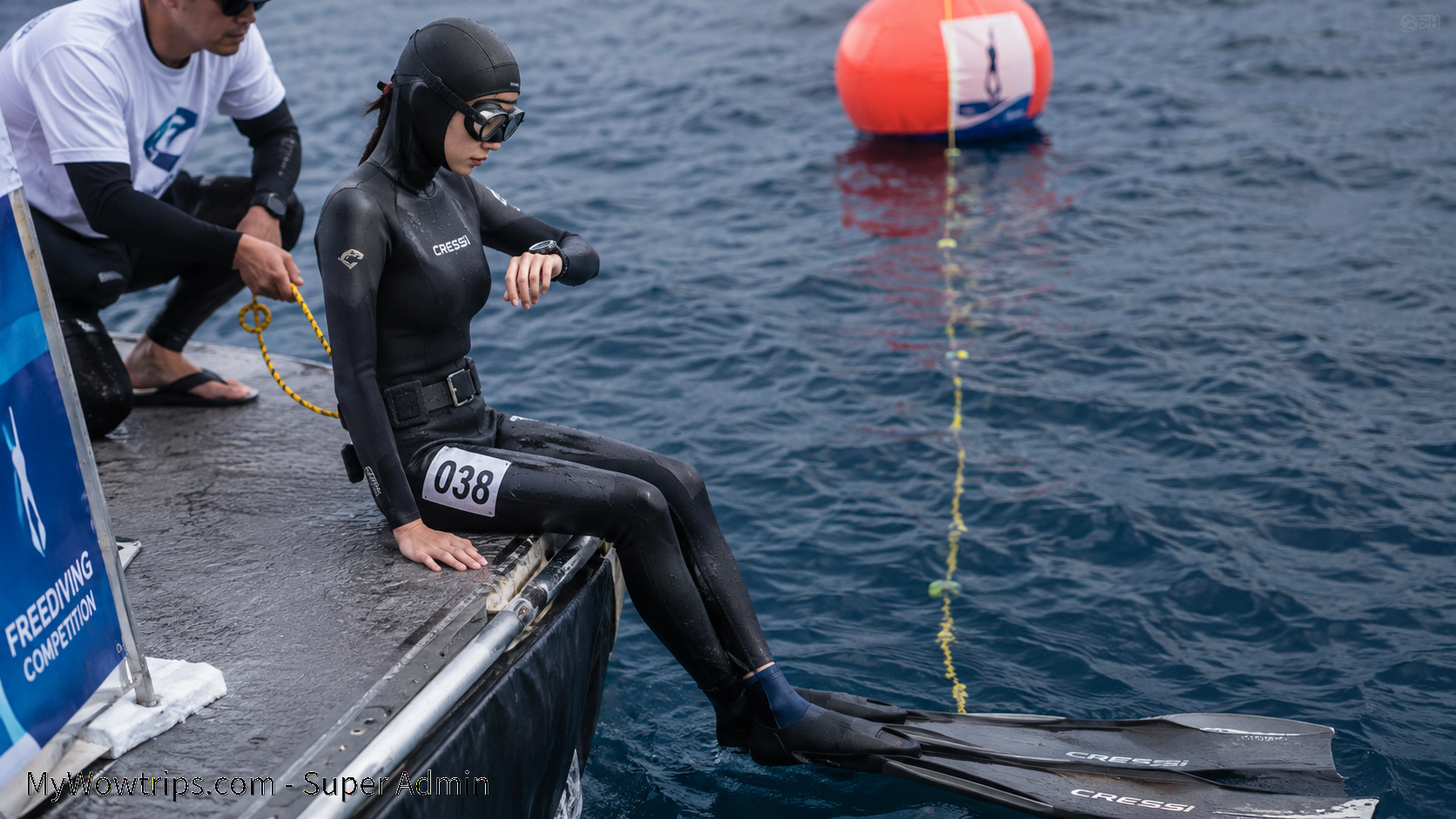
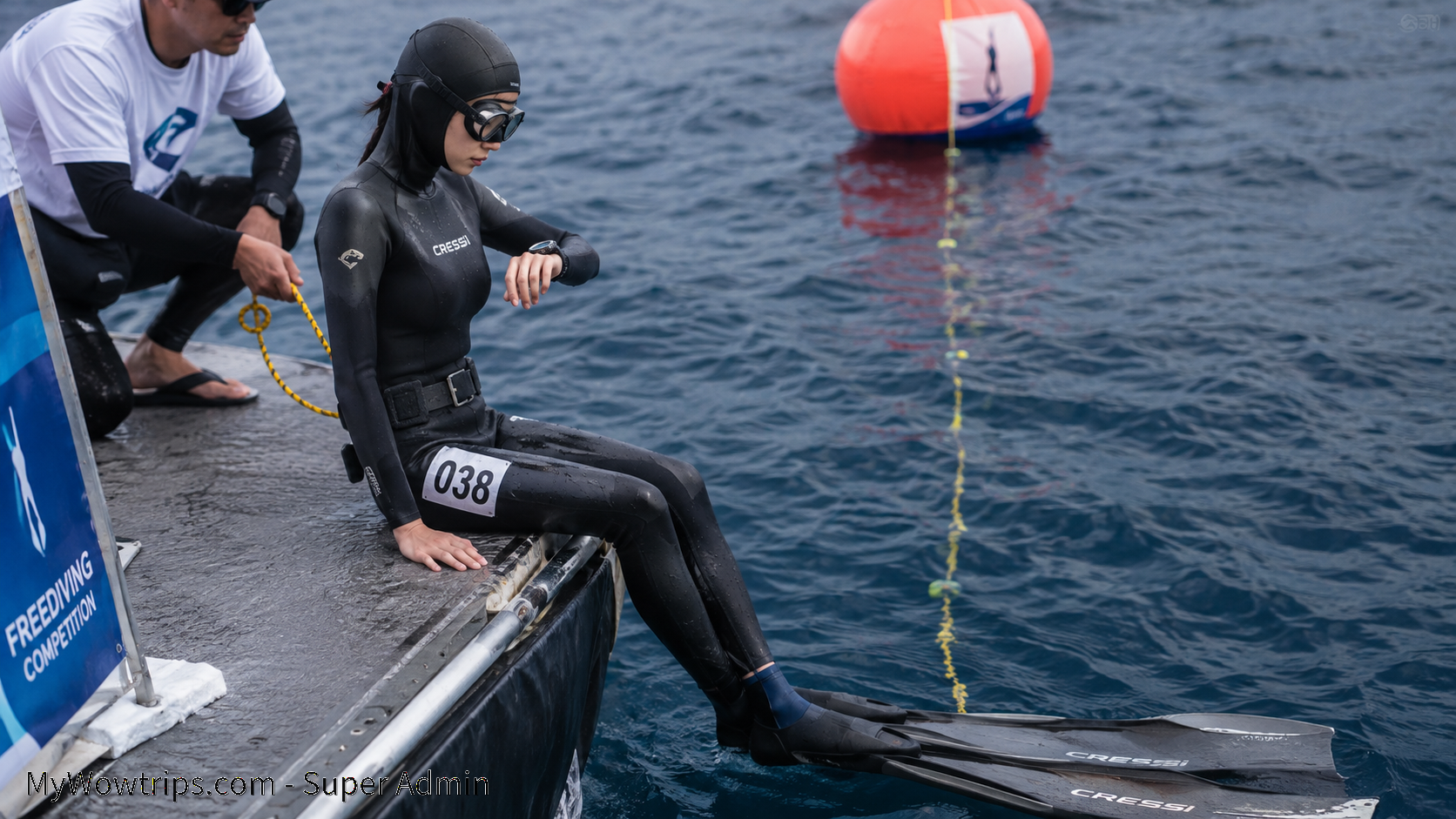
First, the question you care about most: what exactly do freediving competitions measure? They are not about "who can hold their breath longest," but about who can dive deeper or farther under specific finning styles and rules without breaking the safety protocols. Competition is the most serious and most regulated side of freediving — it has strict judges, safety divers, timing and depth-measuring equipment, and a complete set of penalty and safety procedures.
Common Freediving Competition Events
Competitive freediving is mainly governed by organizations such as AIDA and CMAS, and common events fall into two main categories — depth events (vertical descent in open water) and pool events (horizontal distance or static apnea in a pool). Event lists differ slightly between organizations (for example, AIDA also has CWTB constant weight bi-fins and DYNB dynamic bi-fins). The table below gives an overview of the most common events.
Depth Events (Open Water)
Event | English | What you do | In one line |
|---|---|---|---|
Constant weight with fins | CWT | Descend and ascend wearing fins, with constant weight | The most common competition event, and the one with the most depth records |
Constant weight no-fins | CNF | No fins — descend and ascend by swimming only | More difficult; results are usually lower than in the equivalent fin events, and the gap varies by athlete, gender, organization and year |
Free immersion | FIM | No fins; pull down and up along the rope with your hands only | Demanding on equalization and core strength, with a strong sense of rhythm |
Variable weight | VWT | Descend with a weight, ascend with fins or by pulling the rope | Rare in AIDA competition; used more for world record attempts |
Pool Events (Pool)
Event | English | What you do | In one line |
|---|---|---|---|
Static apnea | STA | Float face down at the surface and hold your breath for as long as possible | Measures breath-hold time; it involves relaxation, tolerance to low oxygen, CO₂ response, and mental and technical control; no movement is involved |
Dynamic with fins | DYN | Swim horizontally in a pool wearing fins; the longest horizontal underwater distance wins | Tests finning efficiency, posture and oxygen consumption management |
Dynamic no-fins | DNF | No fins; only breaststroke or freestyle leg kicks | More technically demanding than DYN; distances are usually lower than in the equivalent fin event |
Competition Rules: More Than "Who Is Better"
Judges and Safety Procedures
A team of judges decides whether an athlete has broken the rules; the exact number of judges and the setup follow the competition rules. Depth competitions usually also have several safety divers (Safety Freediver) at different levels, plus a full medical rescue system — they wait at set interception depths, not to compete but to assist. After surfacing, the athlete must complete the surface protocol within the required time: in AIDA, for example, this usually means removing face equipment in order, giving a visible "OK" hand signal and a verbal confirmation, all within 15 seconds; other organizations (such as CMAS) may have different time limits, so the competition rules apply. If LMC (loss of motor control, such as twitching or uncontrolled movement) or a blackout occurs, rescue procedures should be followed immediately; a blackout usually makes that attempt invalid, while LMC and any resulting penalties are decided by the competition rules and the judges.
Common Violations
Surface protocol failure: Not completing the OK hand signal and verbal confirmation within the required time after surfacing; penalised under the competition rules.
Actual depth short of the declared depth: If you do not reach your declared depth, the rules may apply a penalty or score the actual depth — check the rules. Do not force a dive just to reach your declared depth.
Rope pulling: Pulling on the rope for assistance in constant weight events makes the attempt invalid.
Safety intervention: Safety divers should intervene immediately when needed; safety comes before the result. Whether this counts as a violation and how the attempt is scored is decided by the competition rules and the judges.
Depth Declaration
Before the competition, athletes must declare a target depth, and the result is judged against that declared depth. This is not simply "who dives deepest" — the declared depth is part of competition strategy, and if the actual result is lower than the declared depth, the competition rules apply a penalty or a score. Never force a dive or extend a breath-hold just to reach your declared depth — the safety baseline of a competition always comes before the result.
Competition Training: Completely Different from Recreational Diving
Training for competitive freedivers is not "holding your breath in the sea every day"; it is highly systematic physical, technical and mental training:
Pool CO₂ tolerance training: Practise short-interval breath-holds in a relaxed state to improve your body's tolerance to carbon dioxide. Hyperventilation is prohibited at all times; in-water breath-hold training must never be done alone and must be supervised by a buddy or safety diver with rescue skills.
Land breath-hold practice: Do static apnea in a safe setting (on land, with a buddy watching) to learn relaxation and how to observe your body's signals.
Strength and flexibility: Core strength (abdominals / back) is essential for constant weight no-fins and free immersion; thoracic spine and shoulder flexibility affect your duck dive and streamlined posture.
Mental training: Competitive freediving relies heavily on mental preparation — visualisation, meditation, stress management. But be clear that depth diving also depends on equalization, technique, weighting, the rope, equipment, the safety team and medical planning; any depth goal must be set step by step based on your personal training level, equalization ability, technique and the competition's safety plan, not by "toughing it out on willpower".
Competition vs Recreation: Should I Enter a Competition?
Aspect | Competitive freediving | Recreational freediving |
|---|---|---|
Goal | Depth / distance / time | Enjoyment, relaxation, exploration |
Training volume | Set by a coach based on your level, recovery and health | Set by a coach based on your level, recovery and health |
Risk | High (extreme depths carry significant risk and depend on a full safety team) | Moderate (blackout, drowning and pressure-related injuries are still possible) |
Buddy | Designated safety divers + judges + medical team | A buddy with the relevant rescue skills (depth training requires additional safety cover) |
Who it suits | People with a solid foundation who want to push their limits | The vast majority of freediving enthusiasts |
Note: All freediving carries a risk of blackout, drowning and barotrauma — how high the risk is depends on depth, environment, training and the quality of supervision, not on the "competitive / recreational" label. A buddy must have rescue skills, and depth training usually also requires additional safety divers.
If you have been diving for less than a year, build a solid foundation in recreational freediving first — posture, equalization, relaxation, buddy supervision — and then consider whether to compete. Competition pushes you to your limits, and at the edge of those limits, solid basics are your only safety net.
Training and Competition Safety: The Bottom Line You Must Know Before You Compete
Whether you are preparing for a competition or taking part in one, these safety basics apply:
No hyperventilation: Before a competition or during training, do not take rapid deep breaths, force inhales or do lung packing — this significantly increases the risk of shallow-water blackout.
Never hold your breath in the water alone: All in-water breath-hold training must be supervised by a buddy or safety diver with rescue skills, with rescue roles agreed in advance.
Equalize early; stop if there is pain: Equalize early and gently; if pain occurs or you cannot equalize, stop the descent immediately and ascend slightly — never force it.
Dive within your limits; do not chase numbers: Set declared depths and training goals step by step based on your own level, and never force a dive for a result or a record.
Watch for decompression sickness and the interval between repeated deep dives: Decompression sickness in freediving is rare, but repeated deep dives in a short time increase the risk; do not do open-water freediving on the same day after scuba diving.
Stop and get medical care if anything is abnormal: If LMC, blackout, choking on water or persistent discomfort occurs, end the day's training immediately and get a medical assessment, and do not enter the water again for at least 24 hours.
Frequently Asked Questions (FAQ)
Q: What are the world records in freediving competitions?
A: They change over time and by organization for each event, so no specific figures are listed here to avoid outdated information. Check the AIDA International or CMAS official websites for the latest official records.
Q: What certification level do I need to compete?
A: There is no single level requirement that applies to all competitions. Entry eligibility, medical certificates, rescue skills and minimum declared results follow the announcement of each specific competition; in general, a solid constant weight foundation and competition training experience are common prerequisites for depth competitions.
Q: Is competitive freediving dangerous?
A: In well-regulated competitions, with safety divers, judges, a medical team and multiple layers of safety protocols, the risk is much lower than training alone. But competitive freediving is an extreme sport, and competitors must have professional training and strictly follow safety procedures.
Q: Are there freediving competitions in China?
A: Yes. AIDA holds national record competitions and depth competitions in China, and CMAS also has related events. Check official announcements for specific schedules.
Freediving competition is the purest expression of the sport — a person, the water, one breath. But not everyone has to take the competitive path. For most people, the meaning of freediving is not the medal, but the few minutes of quiet conversation with your own body on every dive.
This article is for general information only and does not constitute instruction or advice on competing. Freediving is a high-risk sport; train under a certified instructor and complete the required certification level and medical checks before entering a competition. If you have any health concerns, consult a doctor first.