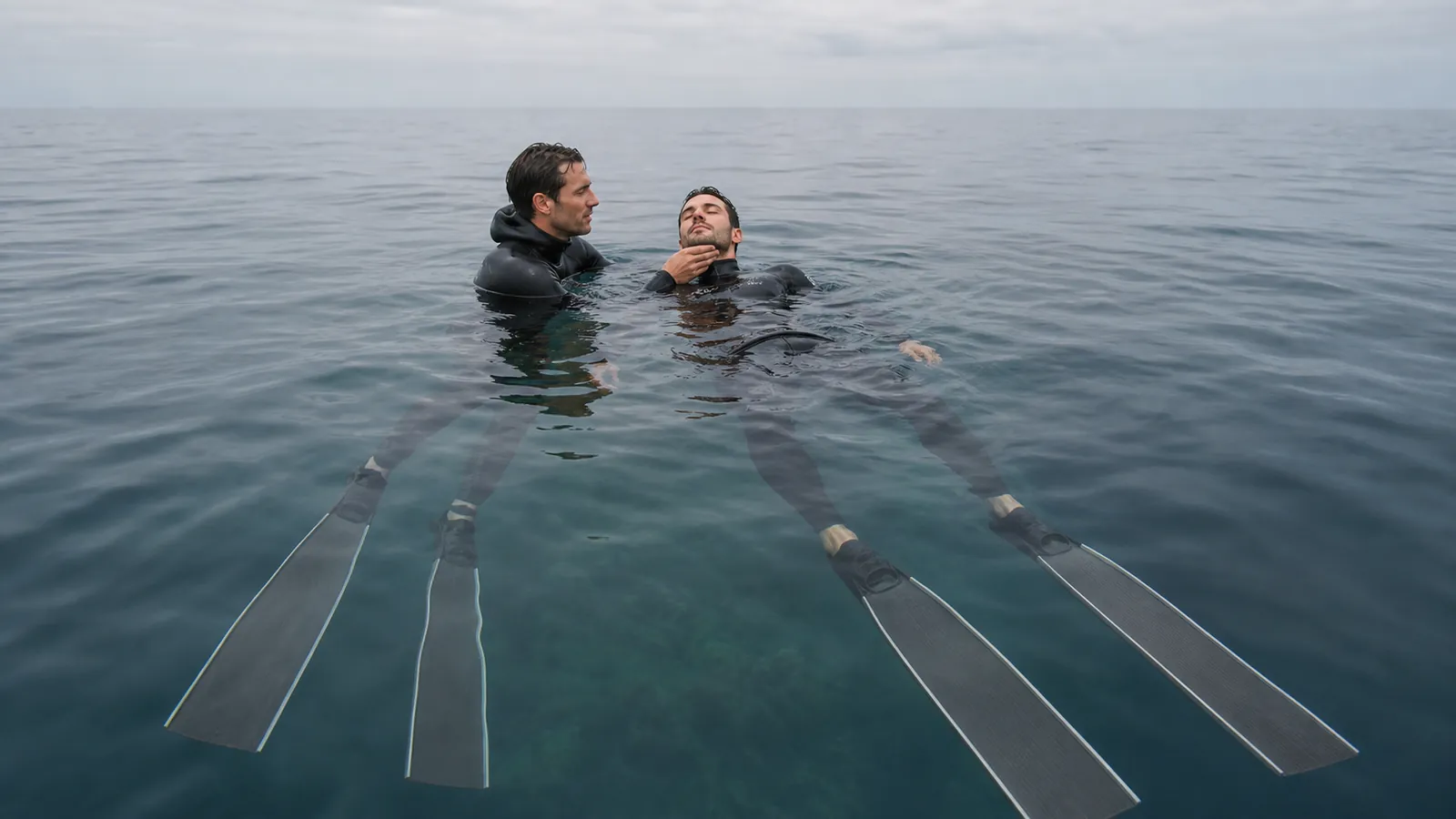
The Freediving Buddy System: Why Half Your Safety Depends on Your Partner
During a freediving rescue training session, I saw one of the most alarming things I have ever witnessed: in the last few seconds of a relaxed breath-hold at the surface, a student's body suddenly went rigid and tipped to one side, while his buddy had his back turned, adjusting his fins. For more than ten seconds, no one noticed what was happening below the surface. Fortunately it was a training setting, and the instructor entered the water at once and brought the person back up.
After that, that student never skipped the buddy system again.
Freediving is a sport built on trust — not trust in your own limits, but trust in the person beside you who will pull you up three seconds before you lose consciousness. The buddy system is not an optional procedure; it is one of the most effective ways we have to keep the risk of shallow-water blackout (BO) and incapacitation to a minimum.
Why You Alone Are Not Enough: Blackout Comes Without Warning
Many people think, "I'm a strong swimmer and I can hold my breath for a long time, so I don't need a buddy." The danger of this belief is that it overestimates shallow-water blackout as an incident you can push through with willpower.
Two Key Features of BO: Sudden and Silent
Shallow-water blackout usually happens in the last few metres before the surface, because at that point ambient pressure drops sharply and the partial pressure of oxygen in the blood falls sharply; the brain can shut down within seconds. No struggle, no splashing, no call for help — the body simply sinks or floats quietly. You may even have "completed" your breath-hold and be on your ascent while consciousness has already left your body.
This means you will never know when that moment is coming. And your buddy is exactly the one person in the right place who can notice something is wrong at the right time.
From Warning Signs to a Real Rescue
A competent buddy does not just stand there and watch; a competent buddy reads the signals: the stillness after the last deep breath at the surface, whether the hands are still stroking rhythmically during the breath-hold, whether the face suddenly relaxes or twitches, whether the eyes focus the moment the diver surfaces. Being a good buddy means watching actively and responding at any moment, not waiting to react after something has already gone wrong.
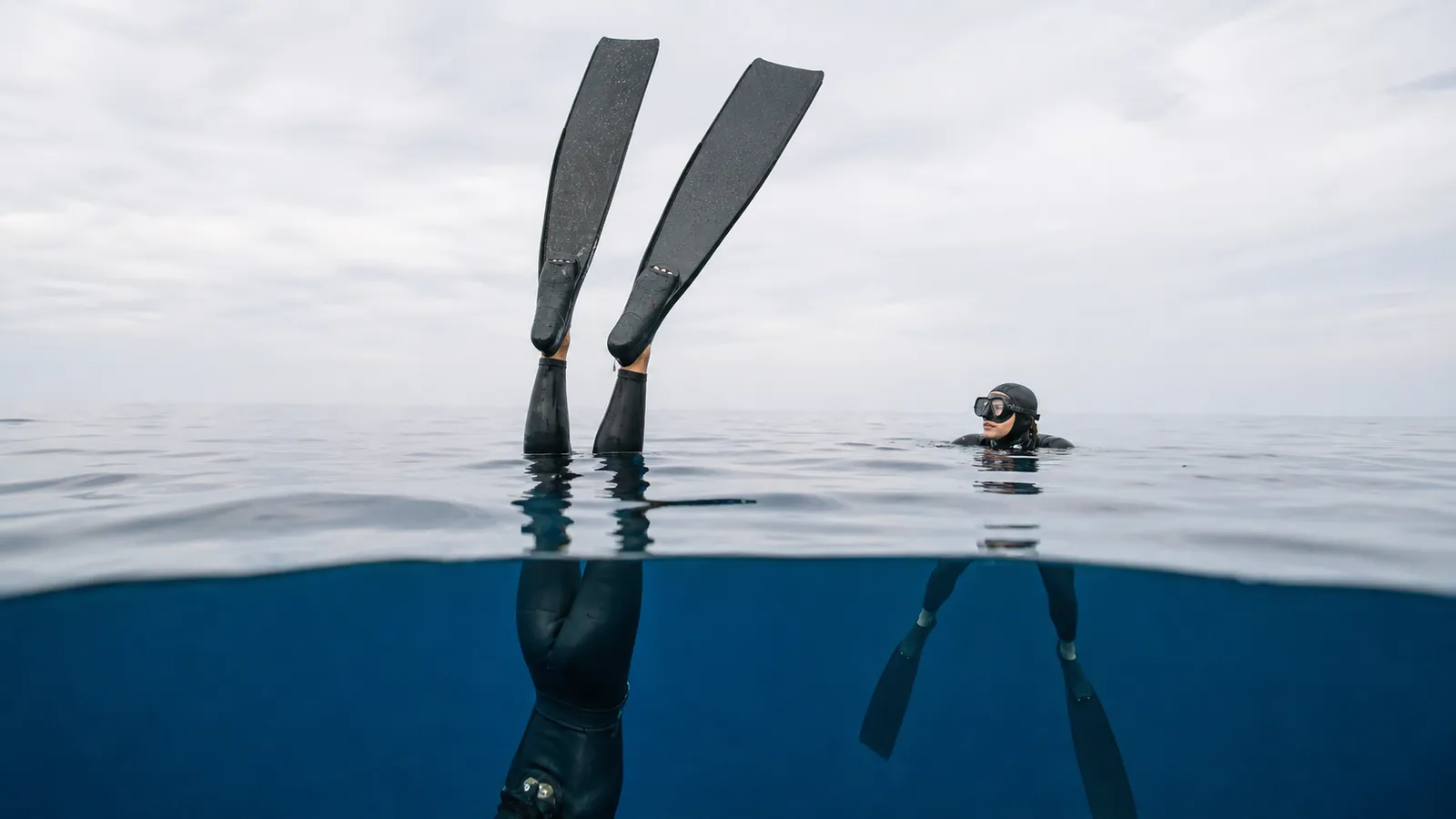 Diagram of a freediving buddy's observation position at the surface
What Buddies Should Get Right, Every Time
AIDA and PADI freediving courses set out clear standards for buddy behaviour. Putting these into practice on every dive makes both divers feel more secure.
Before the Descent: Agree on the "Gatekeeper" Role
Whether one person dives while the other stays at the surface, or you take turns, agree in advance: who dives, who watches the surface, which hand signals show status, and who reacts first if something is wrong. During your final breathing adjustment before the descent, let your buddy see your eyes so you can both confirm you are ready.
On the Ascent: Watch All the Way
Your buddy does not only watch you during the descent; your buddy must watch you all the way through the final part of your ascent. This is the stage where BO is most likely — the buddy on the surface must follow along close to the water, until confirming that the diver has surfaced, has the snorkel in their mouth, is breathing again and their eyes are focused. Only when the diver has "crossed the line" (surfaced safely and is conscious) is the dive truly over.
If Something Goes Wrong: Support First, Then Call, Then Give First Aid
As soon as you see your buddy stop stroking or lose consciousness, support the face first so the airway stays above the surface, and call loudly for help at the same time. Once you have brought the person to shallow water or shore, check breathing and pulse, start CPR immediately if needed, and get medical care as soon as possible. The key here is not to hesitate — it is better to misjudge once than to miss those fatal few seconds.
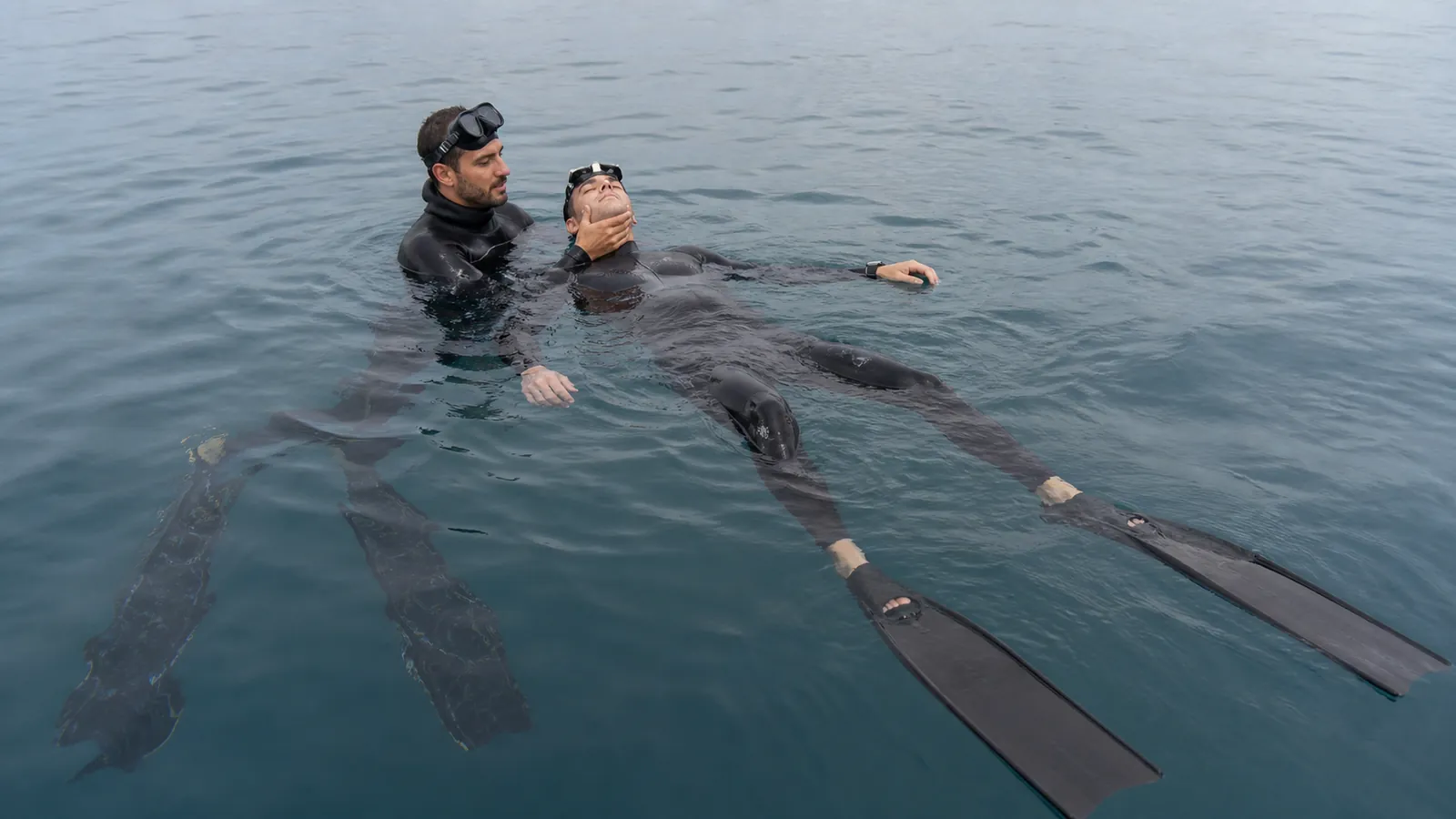 Diagram of a buddy's support-and-rescue technique
Common Misconceptions: These Ideas Make You Less Alert
| Common misconception | What the buddy system requires |
|---|---|
| "As long as I can hold my breath long enough, there is no risk" | BO is not related to breath-hold time; it is related to the sharp drop in oxygen partial pressure during the ascent |
| "I train on land and dive alone too — I'm used to it" | Solo diving is treated as high risk by default; reputable dive shops and training agencies require a buddy |
| "I'll hear my buddy if they call twice" | A verbal call at the surface is not the same as a safety watch; plan for the case where you do not hear it |
| "Rescue is the instructor's job; a buddy just needs to watch" | The buddy is the first responder; basic rescue skills should be learned in a course |
Freediving is one of the few sports where safety awareness matters more than technique. Proper buddy teamwork can greatly reduce the risk of decompression sickness, BO and incapacitation; conversely, a single casual solo dive can make all your skills meaningless.
Turn the Buddy System into Muscle Memory
Learning the buddy system takes more than agreement — it takes repeated practice until it becomes a reflex. In a pool, deliberately rehearse the full sequence — "spot something wrong→support→call out→bring to shore→assess breathing" — so your body remembers the order. Use the same gatekeeper hand signals in every open-water training session so the two of you build an instinct for it. When this sequence becomes muscle memory, you can truly turn your attention back to enjoying the underwater world itself.
The calm and freedom freediving gives you rest on a silent promise to look after each other. Find a buddy you can trust, and practise observation, planning and rescue until they come naturally — then, on every practice dive, you can safely let yourself love this sport a little more.