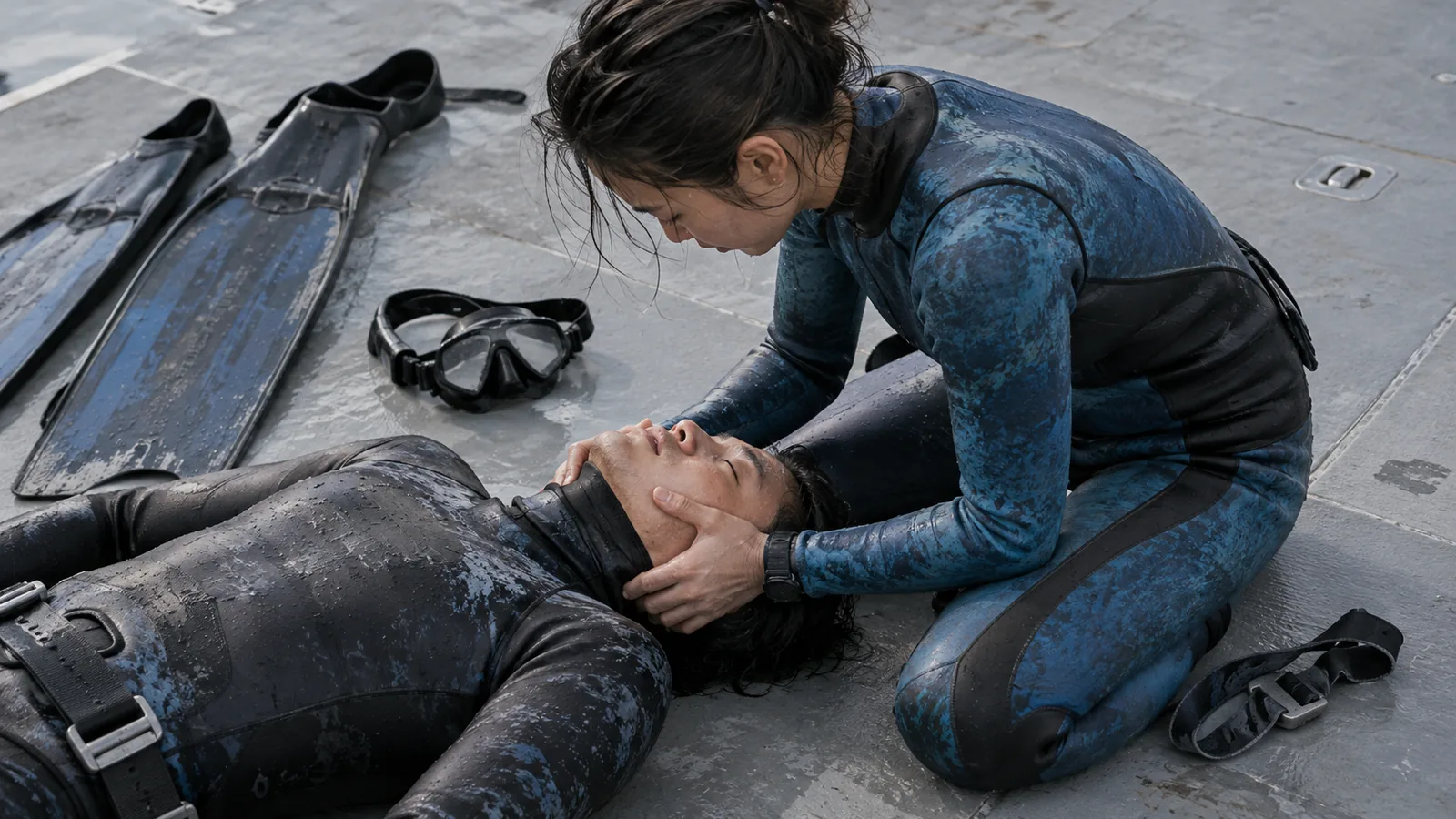
How Long After Freediving Can You Fly | Recovery and Interval After Diving
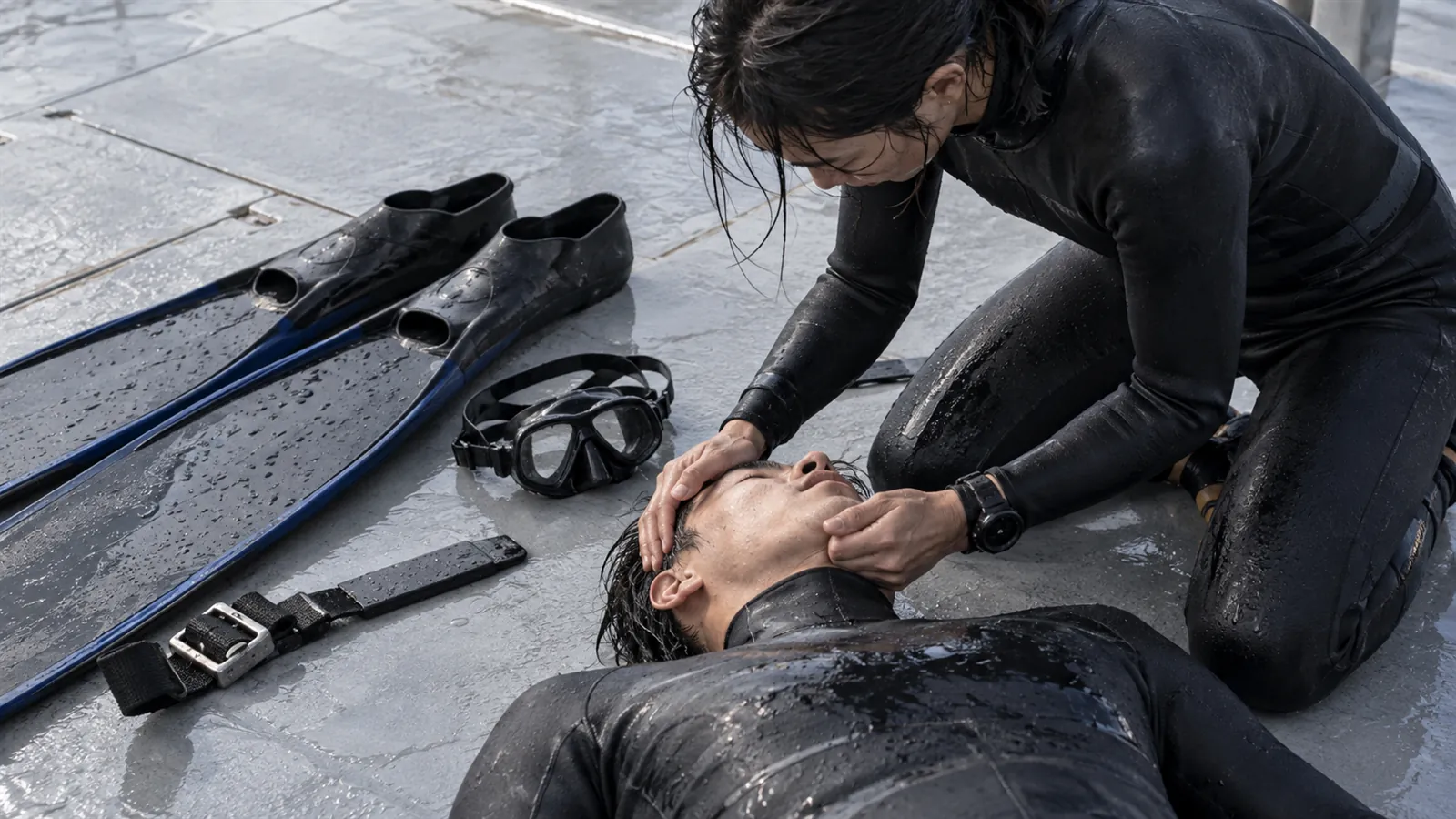 How Long After Freediving Can You Fly | Recovery and Interval After Diving
Last week someone asked me: if I finish diving in the morning, will I make an 8 p.m. flight?
I can't give a simple number. It depends on how deep you dove that day, how many dives you did, how long your surface intervals were, and whether you also did any scuba diving.
But I can explain the reasoning framework.
First, let's be honest: freediving guidance is less clear than scuba guidance
Scuba diving has clear pre-flight interval rules. According to DAN's recommendations: after a single no-decompression dive, wait at least 12 hours; after multiple dives in one day or several consecutive days of no-decompression diving, wait at least 18 hours; after dives that required decompression stops, the interval should be clearly longer than 18 hours — usually 24 hours or more.
Freediving is much less well-defined. Traditionally, freedives were considered shallow and short, with limited nitrogen buildup. But in recent years, as deep training has become more common, cases of decompression sickness in freediving have indeed appeared — especially among people doing dozens of dives a day with short surface intervals.
The key point: DAN's 12-hour and 18-hour figures were developed mainly for scuba diving and cannot be applied directly to freediving. Freediving lacks validated general rules, so the only safe approach is to be more conservative.
More than three variables matter
- Depth: playing around at 5 meters and training at 30 meters are completely different
- Number of dives and surface intervals: this is where problems most often occur. A single 25-meter dive doesn't mean you're safe, but dozens of dives a day with only two-minute rests let nitrogen build up layer by layer
- Bottom time per dive: at the same depth of 20 meters, a 20-second stay and a 1-minute stay produce very different exposure
- Prior scuba diving or hyperbaric exposure: combining scuba and freediving on the same day adds risk
- Cabin altitude on the flight: long-haul flights at higher cruise altitudes cause greater pressure changes
- Presence of symptoms: this matters most
Cumulative exposure deserves more caution than any single dive depth.
A conservative approach
- Shallow, low-exposure recreational diving: there is currently no single minimum interval that covers all situations, but you cannot assume a same-day flight is safe just because you stayed within 10 meters and did only a few dives. If you cannot meet a conservative interval, rebook the flight.
- Deep training, repeated dives, or short surface intervals: same-day flying is not recommended. Plan for at least 18–24 hours; extend it further and consult a doctor with diving medicine experience if exposure was significant, scuba was involved, or any symptoms are present.
- Any suspected symptoms: do not fly.
What to do if symptoms appear
Joint pain, skin itching with rashes, numbness or weakness, dizziness, unsteady walking, altered consciousness, chest pain, or difficulty breathing — none of these are things that will just resolve after a night's sleep.
The correct response is: stop all travel plans immediately, contact emergency services or an organization with diving medicine expertise (such as DAN), and get a professional evaluation. Even if symptoms temporarily improve, seek medical care anyway, because decompression sickness can recur.
A few other things to postpone after surfacing
- Alcohol: dehydration plus vasodilation does not help nitrogen elimination. Save the celebration for the next day.
- Strenuous exercise: avoid weight training, long runs, or similar activities on the same day.
- Hot baths, saunas, and hot springs: high temperatures cause vasodilation, so erring on the conservative side is wise.
- Immediately diving again: repeated dives on the same day require adequate surface intervals.
What you should do is hydrate normally and rest, and avoid dehydration and alcohol. But to be clear: hydration is not a way to speed up nitrogen elimination, and it cannot replace adequate surface intervals. It simply keeps you from diving in a dehydrated state.
In closing
Back to the question at the start.
If my morning had involved deep training or dozens of repeated dives, I would not take an 8 p.m. flight — not as a personal feeling, but because a conservative interval means rebooking when needed.
If it was a few shallow recreational dives with adequate intervals, then I would evaluate the specifics.
The difference is not about the flight — it's about how much exposure you accumulated that day. And only you (or your dive computer) can do the math.
The above is a decision framework, not medical advice. Freediving has no unified standard for pre-flight intervals. After deep or repeated dives, use a more conservative 18–24 hours or longer, and consult a doctor with diving medicine qualifications. If any suspected symptoms appear, do not fly and contact emergency services or DAN immediately.