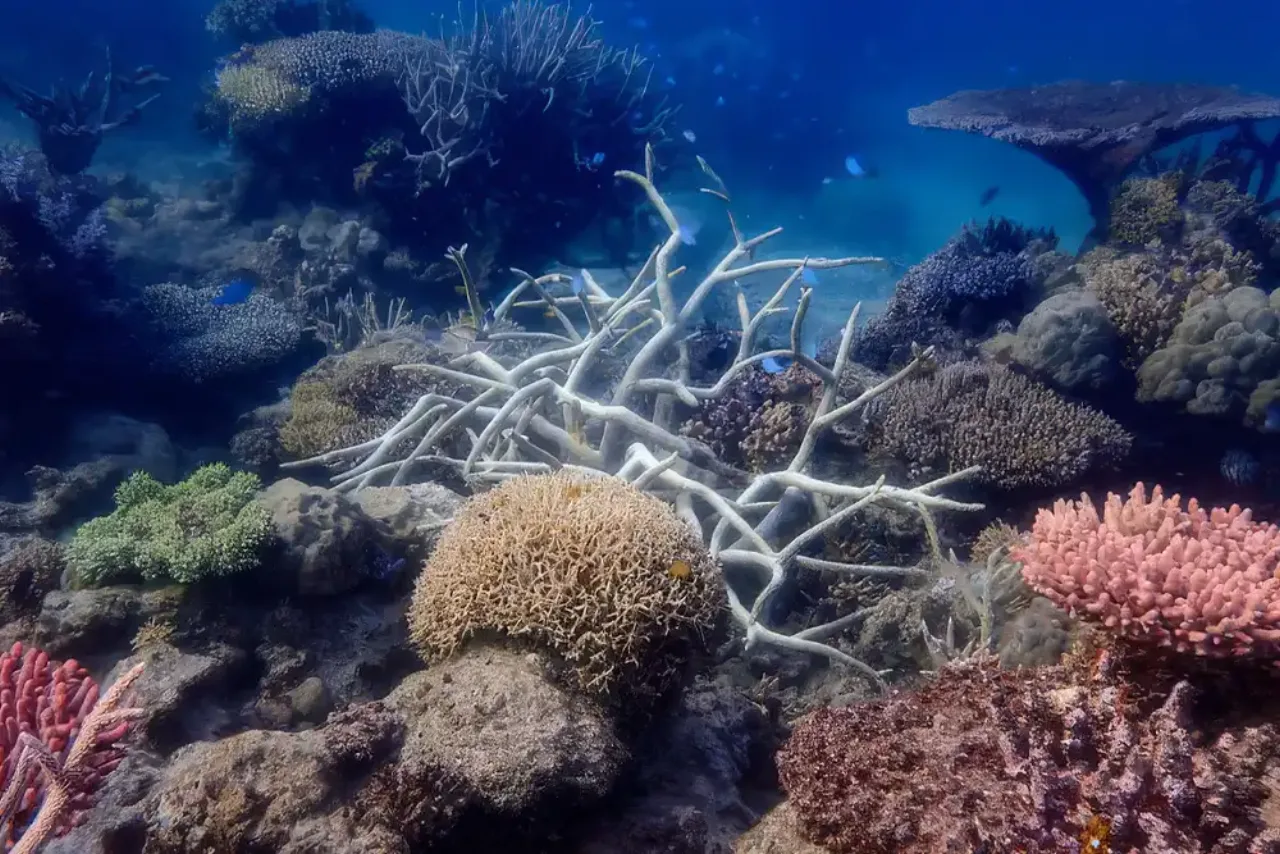
The latest annual survey report from the Australian Institute of Marine Science (AIMS) shows that during the 2025-26 monitoring season, hard coral cover in three regions of the Great Barrier Reef remained stable or increased. This recovery news came quickly, after consecutive bleaching events in 2024 caused coral cover to fall sharply from record levels in 2022. The AIMS Long-Term Monitoring Program (LTMP) has surveyed the Great Barrier Reef since 1985. This survey surveyed 121 reefs across the northern, central and southern Great Barrier Reef between August 2025 and June 2026.
The report shows that average hard coral cover in the three regions increased slightly or remained similar compared with 2025 levels. AIMS said this indicates “the 2025 mass bleaching event and the regional bleaching events recorded in the northern and central regions in early 2026 had limited impact.” Among the surveyed reefs, 28% showed an increase in hard coral cover, 56% showed no net change, and 16% showed a decline. Of the 121 surveyed reefs, only 3 had hard coral cover below 10%, 64 had cover between 10% and 30%, 42 between 30% and 50%, 12 between 50% and 75%, and no reef had cover above 75%. Regional hard coral cover remained above or close to long-term average levels.
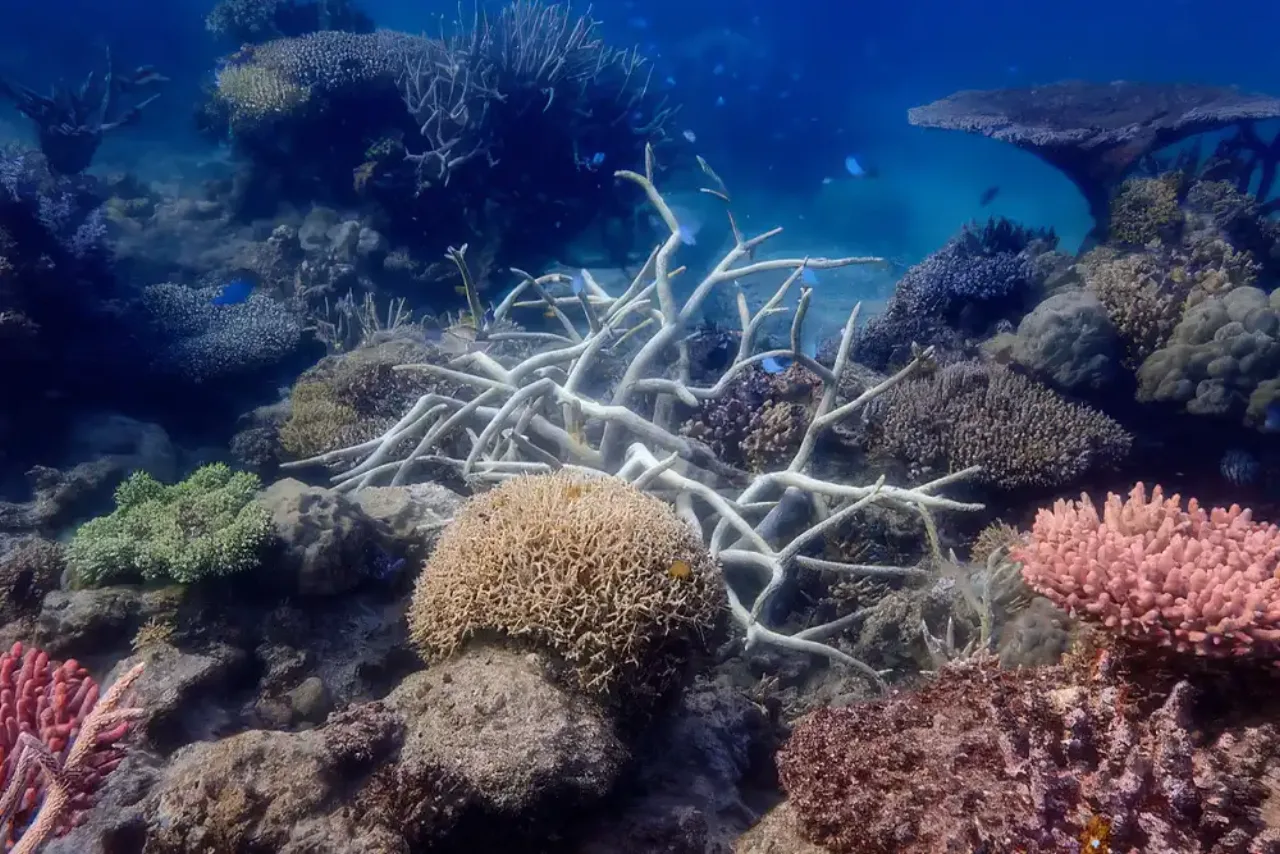
Image source: Divemagazine (image copyright belongs to the original author; for infringement, please contact us for removal: support@mywowtrips.com)
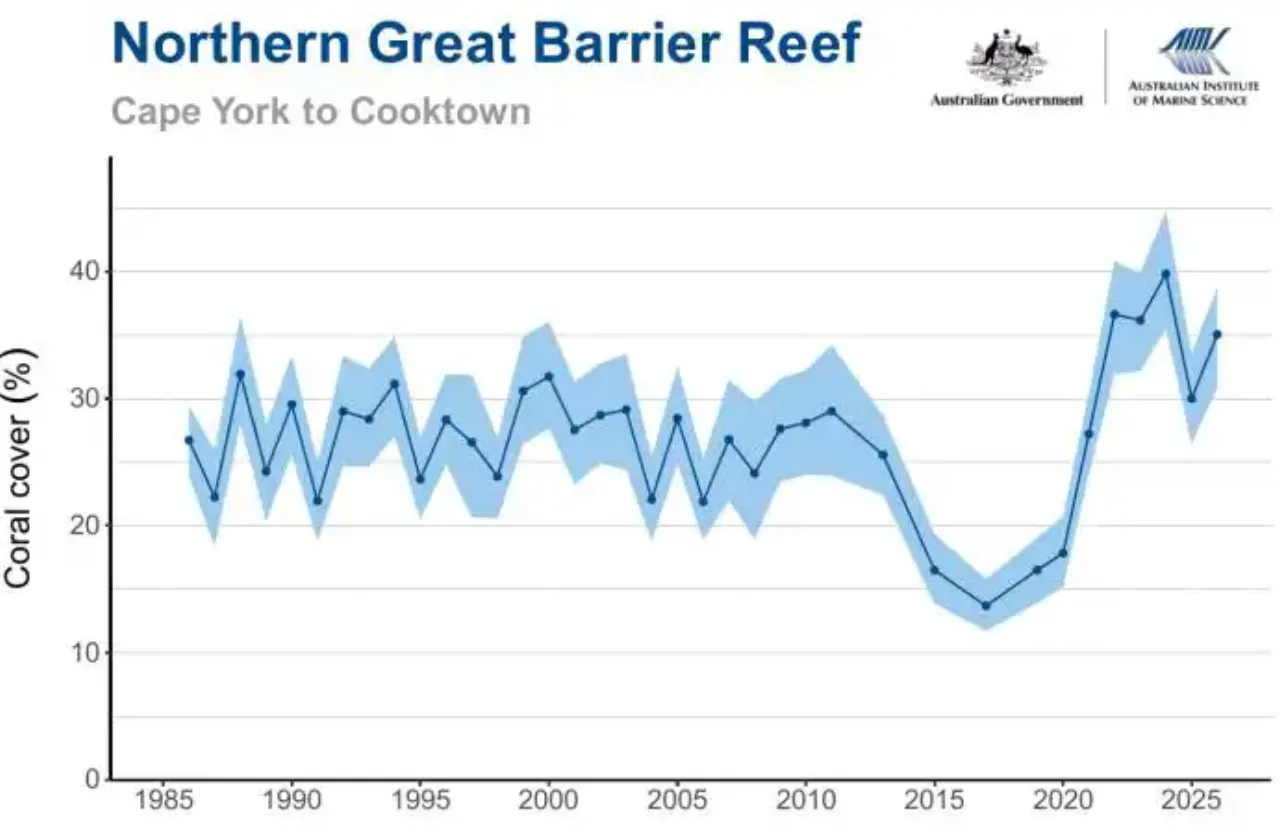
Image source: Divemagazine (image copyright belongs to the original author; for infringement, please contact us for removal: support@mywowtrips.com)
Specifically, average hard coral cover in the northern Great Barrier Reef rose from 30% in 2025 to 35.1% in 2026, a relative increase of 16.7%, remaining above the long-term average of 27%. The central Great Barrier Reef rose from 28.6% to 31.6%, a relative increase of 10.2%; AIMS said the increase was within the margin of error, but cover remained above the long-term average of 20%. The southern Great Barrier Reef was relatively stable, dipping slightly from 26.9% to 26.4%, a decrease within the margin of error, but cover remained below the long-term average of 29.3%. Dr Mike Emslie, who leads the AIMS LTMP, said many reefs showed slight increases or remained stable in coral cover, and large declines were uncommon. He noted that although the reef again experienced a summer with above-average sea temperatures, late-summer monsoon activity increased cloud cover and lowered sea temperatures, which may have limited the severity and extent of bleaching in the 2025/26 summer. In addition, during the summer the Great Barrier Reef was affected by floods and two tropical cyclones: Category 1 Cyclone Koji crossed the central Great Barrier Reef in January 2026, causing minor coral loss on several reefs; Category 5 Cyclone Narelle crossed the northern Great Barrier Reef.
Source: Divemagazine · Original link · Image source: Divemagazine (image copyright belongs to the original author; for infringement, please contact us for removal: support@mywowtrips.com)
MyWowTrips.com Editor